Brand overview
Brother is a global manufacturer of sewing machines, overlockers, embroidery machines, and related products for home sewists, small businesses, and industrial users. The lineup spans entry-level machines at modest prices through advanced multi-needle and combination models that cost much more. Most home sewists shop in the lower to mid range. Brother also sells accessories separately and in bundles.
Brother is one of the most widely available sewing brands. Many models are designed to be approachable, with clear controls and feature sets that scale from basic stitching to quilting and embroidery. That mix of price options and easy learning curve is a big reason the brand shows up so often in beginner recommendations.
Brief history
Brother’s sewing roots go back more than a century. Here is a short timeline of the milestones that matter for sewists.
Beginning
The Brother Group began in 1908 when Kanekichi Yasui opened a sewing machine repair shop. His son Masayoshi later took over and aimed to build sewing machines in Japan, moving the industry from import dependence toward domestic production and export. In 1932 he produced a successful home chain-stitch machine for making straw hats. Masayoshi and Jitsuichi then developed the machinery needed to manufacture sewing machines themselves.
1950s
After selling made-in-Japan sewing machines from 1947, Masayoshi Yasui visited the United States in 1950 to study the market and decided to diversify. Brother used motor and press technology from sewing and knitting machines to expand into other products, including knitting machines, household appliances, and eventually portable typewriters.
1960s
Brother set up subsidiaries in the United States (1954) and Ireland (1958), then grew sales locations across Europe and the Americas. In 1968 it acquired a major sewing machine producer in the United Kingdom. The 1960s and 1970s prepared the company for broader international operations in the 1980s.
1970s
Brother introduced NC-controlled straight-stitch sewing machines in the 1970s. In 1979 it began production of the Opus 8 home zigzag machine, described as the industry’s first computerized sewing machine.
Brother today
From the late 1990s Brother moved much of its sewing machine production to China, where most models are made today. The brand now covers sewing machines, sewing and embroidery combinations, commercial embroidery machines, overlockers, and home cutting machines, with a large catalog of sewing and overlocker models.
Brother operates a museum in Nagoya, Japan dedicated to its history.
What the brand is known for
Brother is known for approachable home machines, a wide Innov-is and XR range, strong embroidery options (including Luminaire and multi-needle PR models), and popular overlockers. Features and pricing vary a lot by series, so it helps to match the machine to how you sew rather than shopping by brand name alone.
Where Brother sewing machines are made
Most Brother sewing machines are made in China today. The company also has factories in Japan, Taiwan, and the USA. Where a given model is built can depend on labor and materials costs, infrastructure, regulations, and demand for that product type.
Product lines and machine categories
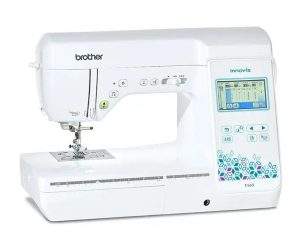
Brother sells a broad mix of mechanical and computerized sewing machines, combination sewing and embroidery models, dedicated embroidery machines, and overlockers. Where we have reviewed a model, the name links to that review. Lineups change, and availability varies by market, so some listed machines may be current while others are older or harder to find new.
Mechanical and entry-level sewing machines
Entry mechanical and simple computerized models for beginners and everyday home sewing, including Brother’s L, LX, AE, and SH lines.
- Brother LX17
- Brother LX25
- Brother L14S
- Brother LX3817
- Brother XM2701
- Brother SH40
- Brother XR27NT
- Brother XR37NT
Computerized sewing machines
Computerized Brother machines add more stitches and convenience features. Common US and related-market lines include FS, XR, and Innov-is A and F series models.
FS and XR Series
- Brother FS60X
- Brother FS70WTX
- Brother FS100WT
- Brother FS130QC
- Brother FS180QC
- Brother FS210
- Brother FS250FE
- Brother XR3774
- Brother XR9550
- Brother CS7000X
- Brother CS5055 (older / limited stock)
Innov-is A-series
- Brother Innov-is 15
- Brother Innov-is A16
- Brother Innov-is A50
- Brother Innov-is A65
- Brother Innov-is A60SE
- Brother Innov-is A80
- Brother Innov-is A150
Innov-is F-series
- Brother Innov-is F410
- Brother Innov-is F420
- Brother Innov-is F460
- Brother Innov-is F560
- Brother Innov-is F440E
- Brother Innov-is F480
- Brother Innov-is F540E
Quilting and large-workspace machines
Heavy-duty and quilting-focused Brother machines for thicker fabrics, larger projects, and stronger feed.
- Brother ST371HD Strong and Tough
- Brother HF27 Strong and Tough
- Brother Innov-is NV1100
- Brother Innov-is NV1300
- Brother Innov-is NV1800Q
- Brother Innov-is VQ2
Sewing and embroidery machines
Combination sewing and embroidery machines, from mid-range Innov-is models through Brother’s higher-end Luminaire and Stellaire lines.
- Brother Innov-is F580
- Brother Innov-is M280D
- Brother Innov-is NV2600
- Brother Innov-is NV2700
- Brother Innov-is V5LE
- Brother Innov-is Stellaire XJ1
- Brother Luminaire Innov-is XP1
- Brother Luminaire 2 Innov-is XP2
- Brother Luminaire Innov-is XP3
Embroidery machines
Dedicated embroidery and multi-needle models for sewists who want embroidery as the main job of the machine.
- Brother Innov-is NV880E
- Brother Innov-is M240ED
- Brother Innov-is V3
- Brother Stellaire Innov-is XE1
- Brother VR
- Brother PR680W
- Brother PR1055X
Overlockers and coverstitch machines
- Brother 2104D
- Brother 3034DWT
- Brother 4234D
- Brother 1034D
- Brother M343D
- Brother Airflow 3000
- Brother CV3440 Coverstitch
- Brother CV3550 Coverstitch
Older and discontinued models
These entry and mid-range machines are older or legacy models that still show up in reviews and used markets.
Warranty, maintenance, and repairs
Brother offers a limited 3-year warranty on machines for typical household use, covering manufacturing defects from the date of purchase. It does not cover normal wear and tear or damage from misuse or accidents. Register your machine on the Brother warranty page. Business-related equipment typically has a one-year guarantee. Check the warranty terms that ship with your model for exact coverage.
For service, take the machine to an authorized sewing machine service center in your country. Brother also provides parts information, tutorials, and support materials through brother-us.com/support and regional Brother sewing support sites.
If you think a machine is defective under warranty, contact Brother customer service by phone or chat. They can confirm coverage and any proof-of-purchase requirements. When a unit qualifies, Brother may arrange a replacement or refurbished machine according to their warranty process. Register the replacement so coverage continues.
Frequently asked questions
Common questions about Brother sewing machines:
is sister swing machine product from brother factory