
How To Choose The Best Overlocker In 2026
If you sew garments often and want clean, durable edge finishes, an overlocker (serger) is one of the most useful machines you can add. Overlockers have a reputation for being fiddlier and more expensive than a standard sewing machine. That reputation is partly fair. Once you learn threading and basic settings, though, they save time and produce finishes that are hard to match on a regular lockstitch machine.
There is a reason most ready-to-wear clothing is finished on an overlocker: the stitch wraps the fabric edge, trims as you sew, and handles stretch fabrics far more gracefully than a zigzag alone. Sewing machines remain essential for construction details, but they do not replace what a serger does at the seam edge.
This guide covers how overlockers work, which features matter for home sewing, and several strong models across different budgets. If you want a quick comparison first, use the table below.
Best Overlocker In 2026
| Preview | Most Popular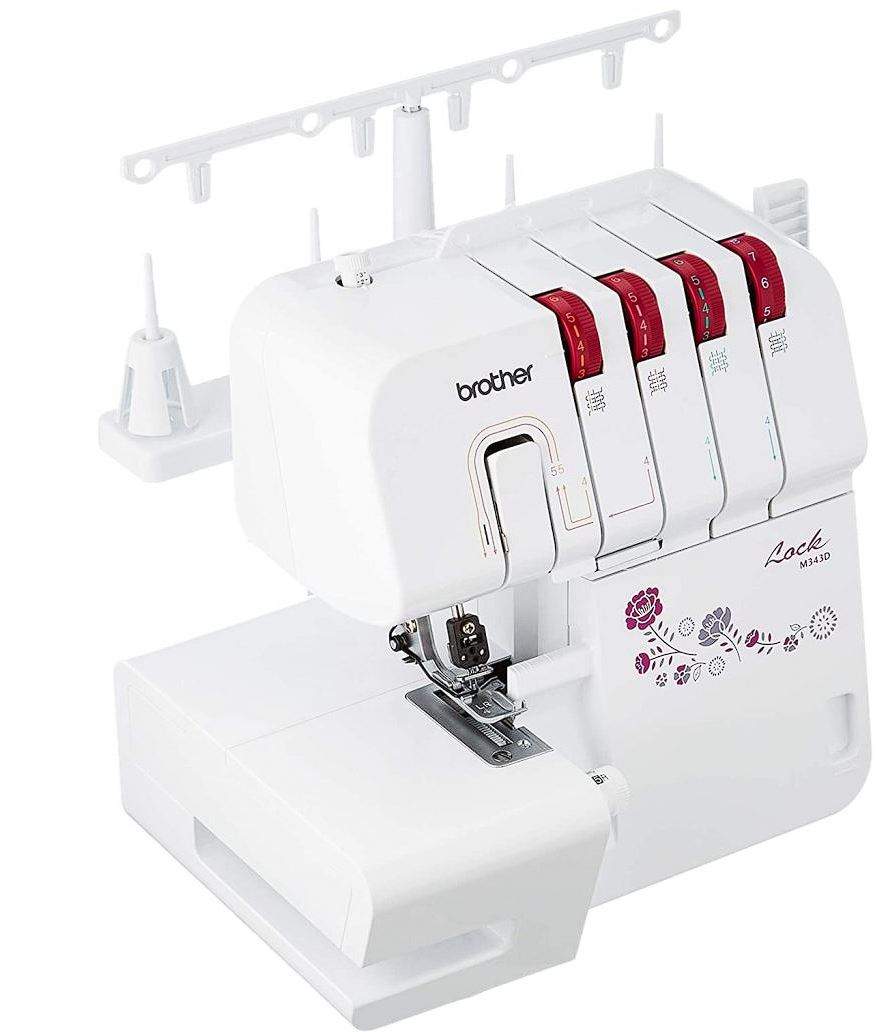 | Best Overall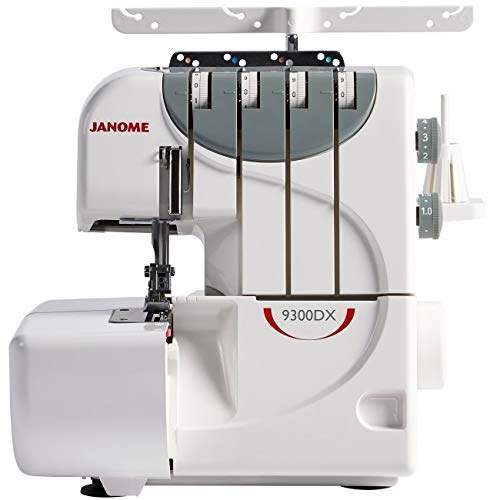 | Best Value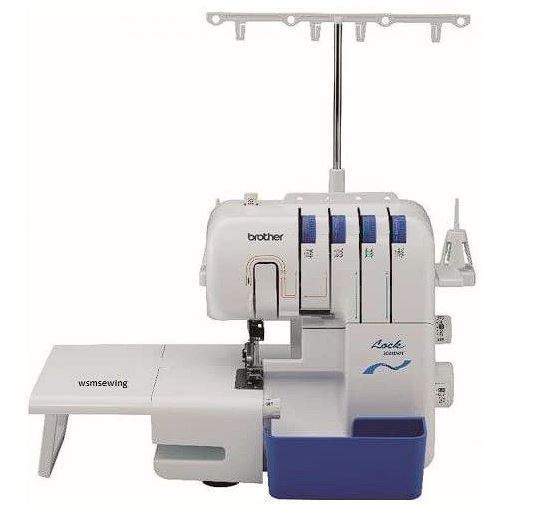 |
|---|---|---|---|
| Product | Brother M343D Overlocker | Janome 9300DX Overlocker | Brother 3034DWT Overlocker |
| Thread | 3 or 4 thread overlock | 3 or 4 thread overlock | 3 or 4 thread overlock |
| Differential Feed Ratio | 0.7mm to 2.0mm | 0.5mm to 2.2mm | 0.7mm to 2.0mm |
| Dimensions | 38.5 x 33 x 36.5 cm | 38 x 37 x 35 cm | 43.7 x 36.3 x 32.8 cm |
| Weight | 7.18Kg | 8.02Kg | 7.78Kg |
| Positive Features | F.A.S.T lower looper threading system | Easy rolled hem conversion | F.A.S.T lower looper threading system |
| Price |
Best Overlockers – Buying Guide
A little prep before you buy pays off. Overlockers differ in thread count, differential feed, ease of threading, and accessory support. Matching those details to your fabric mix matters more than chasing the highest stitch-per-minute number.
What Is An Overlocker & How Do Overlockers Work?
Overlockers began as industrial machines for sewing over fabric edges with a durable, professional finish. At home, they are used for seaming knits, finishing woven edges, hemming, flatlocking, and decorative edging. Modern domestic models are more compact and more affordable than older industrial units, which is why many sewists keep one beside a regular sewing machine.
Compared with a sewing machine, an overlocker is usually faster at edge work and includes a knife that trims excess seam allowance as you sew. Instead of a bobbin-based lockstitch, an overlocker uses loopers fed by cone or spool thread. Those loopers form interlocking loops that enclose the fabric edge inside the stitch.
How Many Threads Do I Need?
Domestic overlockers commonly use 2, 3, or 4 threads, and some higher-end machines add a 5-thread safety stitch. Most home sewists are well served by a 3/4-thread machine. Five-thread models cost more, and many sewists rarely use the fifth thread unless they do a lot of heavy woven seaming.
Here is a practical look at common thread setups:
2-thread overlock: Useful for lighter edge finishing, attaching lace or elastic in some techniques, flatlock-style seams, and everyday hemming on lighter fabrics. Not every machine offers a true 2-thread mode without a converter.
3-thread overlock: A common choice for finishing edges and seaming lighter garments. It has more give than many 4-thread seams, but less strength for high-stress areas.
4-thread overlock: The workhorse stitch for many garment sewists. It combines strength with enough stretch for knits and gives a sturdy finish on many wovens.
5-thread overlock/safety stitch: Found on more expensive machines. It creates a very strong seam for heavier fabrics such as denim. Useful if you need that construction often; optional if you mostly sew light to medium garments.
Differential Feed
Differential feed is one of the most important serger features. Overlockers use two sets of feed dogs that can run at different rates. Matched speeds feed fabric evenly. Changing the ratio helps control stretch fabrics (reducing wavy seams) or create gathers and lettuce-edge effects. If you sew knits, prioritize differential feed over extra decorative extras you may never use.

Different Types Of Overlocker Stitches
- Coverstitch (often needs a coverstitch or combo machine; not every overlocker can do this)
- Flatlocking
- Narrow Hem
- Rolled Hem
Top Overlocker Recommendations
These picks cover budget, mid-range, and premium home overlockers. Check current prices in the product boxes, and match threading ease and differential feed to your experience level.
Brother M343D Overlocker
Brother is a popular overlocker brand for home sewists, and the M343D (also seen in related listings as M343DWT, depending on kit and region) is a strong budget option.
It offers 3- and 4-thread overlock stitches, plus narrow overlock and rolled hem options. Optional presser feet can expand techniques such as blind hemming and pin tucking.
Brother’s F.A.S.T. lower looper threading system makes this one of the easier entry overlockers to thread. Many kits include instructional media to walk through stitches and setup. For the money, it covers core serger work well. The main drawback for many users is noise in use. Read the full M343D review for more detail.

Janome 9300DX Overlocker – Best Overlocker
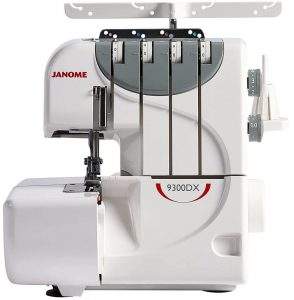
The Janome 9300DX is a sturdy, compact 3/4-thread overlocker with consistently strong customer feedback. Stitch quality is a highlight, and adjustable cutting width (about 2.0 to 5.7 mm) helps tune finishes for different fabrics. It uses standard ballpoint needles suited to many knit projects.
An extra-high presser foot lift helps with thicker fabrics or layered seams. Color-coded threading paths make setup clearer, and some units ship pre-threaded, which is a welcome start given how intimidating serger threading can feel at first.
At around 8 kg (about 17.6 lb), it feels solid on the table. For dressmaking and home décor edge finishing, it remains one of the most balanced recommendations in this guide. Full details are in the Janome 9300DX review.


Jaguar Advanced 099 Overlocker
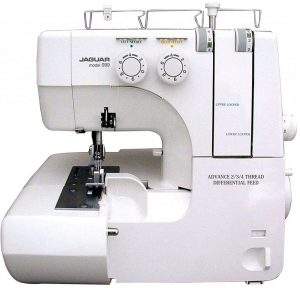
Jaguar manufactures sewing equipment connected with several well-known brand lines, and the Advanced 099 has become a popular home overlocker in its own right. It can run as a 2-, 3-, or 4-thread machine, with adjustable stitch length around 1 to 5 mm and speeds up to about 1,300 stitches per minute.
Standout practical features include clear tension controls for fine needle settings and lay-in tensions with release for easier looper threading. A built-in needle threader and thread cutter also help day-to-day use. Accessory kits are usually generous, which improves value if you want to try more techniques without buying extras immediately. Confirm the current accessory list on the product page.

Brother 3034DWT Overlocker – Best Overlocker To Buy
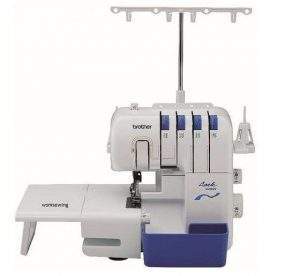
The Brother 3034DWT is another popular Brother serger with strong buyer feedback. In stitch capability it is very close to the M343D family. Differences often come down to build/kit details, a scrap catcher on many 3034DWT packages, and the wide table included with the WT version.
There is also a Brother 3034D without the extension table. If you sew larger garment pieces, the WT wide-table kit is the more practical buy. If you mainly finish small seams and want to spend less, compare both listings carefully before choosing.

Singer 14HD854 Pro Speed Overlock Machine
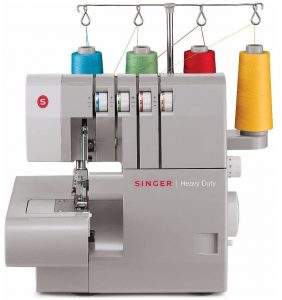
The Singer 14HD854 is known for adaptable feeding that helps reduce puckering when settings are dialed in correctly. It covers common serger tasks such as blind hems, rolled hems, flatlocking, and finishing raw edges.
A stronger motor helps with heavier fabrics, and stretch fabrics are a natural fit when differential feed and tensions are set well. A free arm makes cuffs and armholes easier. At about 7.4 kg (around 16 lb), it is one of the heavier models here, which usually points to a more substantial build than ultra-light plastic machines.

Janome AT2000D Overlocker
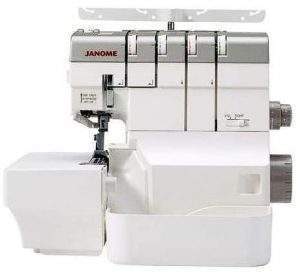
The Janome AT2000D (AirThread 2000D) is the premium pick in this list. It supports 2-, 3-, or 4-thread work and includes a broad stitch range for sewists who want one capable home serger for most techniques.
Ease-of-use features are the reason people stretch for this model: a built-in reference panel, air-threading for the loopers, and a tilting needle clamp that makes needle changes faster. Those details matter if threading frustration is what has kept you away from overlockers.
It costs more than the budget Brother and mid-range options, so it makes the most sense if you will use a serger regularly. For the full feature rundown, see the linked AT2000D review.

Final Words
An overlocker is the right tool when you want faster edge finishing and better results on knits and garment seams. Start with thread count, differential feed, and threading ease, then choose a budget that matches how often you sew. The models above cover solid entry, mid-range, and premium paths without forcing you into industrial equipment.
Do you already use an overlocker? Which model, and what do you like or dislike about it? Share your experience in the comments.
Hi there, please could you tell me a good overlocker for a beginner?
Hi Anne, It depends on how much you are looking to spend but the Brother M343D is a good entry mode. It has a good mix of affordability and quality features such as the F.A.S.T lower looping system
Hi, I can use a points scheme to get a Brother 2504D Overlocker , this would be my first though, so I don’t know if this is a good model. As it’s a Brother, it seems like a great option. What are your thoughts? Like I said, I’m a newbie & have never used one before. Thanks.
Hi there, The 2104D is a good model and suitable for beginners I would get it if I was you.
Looking to purchase the Brother 3034D overlocker and have used overlockers before but some are quite loud. Please could you let me know if this model is ok or if there is another make which is quieter.
Hi Beverley, unfortunately overlockers do tend to be quite loud but the 3034D isn’t that bad and it is a good choice, I would stick with it.
I have a White 228 super lock. I’ve had it for at least 25 years and cuss it daily. Thank you for your article as I’m looking to replace this one.
Hi,
Could you recommend overlocker best suited for fine stretch fabric please.
I bought a Janome 9300DX overlocker and would strongly advise AGAINST buying this machine as it is very difficult and fiddly to thread. I rarely use it because of this, so a complete waste of money.