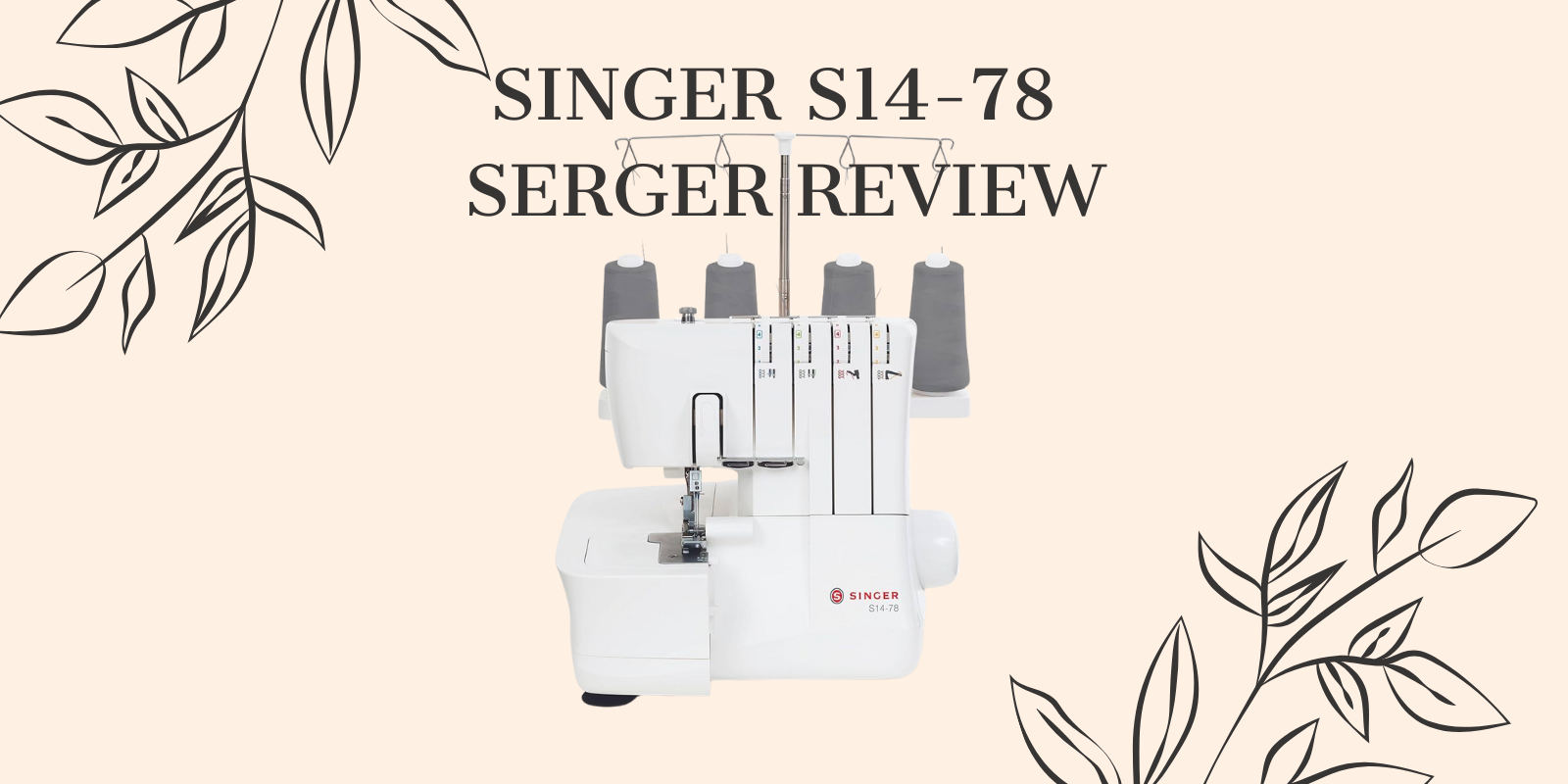
Getting clean, finished seams on handmade garments can be tricky, especially with knits or fabrics that fray. That is where a serger like the Singer S14-78 comes in. Positioned as a newer take on the long-popular 14SH754, the S14-78 keeps familiar overlock functions and adds a few practical upgrades. It is built for home sewists who want polished edges without a steep learning curve or a professional price tag.
Exact dollar pricing moves with retailers, so check the product box below for the current figure. In the US market this model usually sits in a comfortable mid-range serger lane rather than the bargain-bin or high-end air-threading tier.
Overview
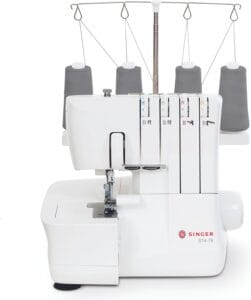
The S14-78 mixes speed, stitch options, and beginner-friendly layout. It handles everyday finishing and knit hems, and it can also produce decorative edges such as rolled hems and lettuce edges. You can set up 2-, 3-, or 4-thread stitches depending on the job, and switching between those setups gets easier once the color-coded paths are familiar.
Compared with the older 14SH754, useful upgrades include a free arm for smaller circular pieces and LED lighting for better visibility. Those sound minor on paper, but they make real projects less awkward.


Main features
- 2, 3, or 4 thread stitches: overlock seams, finishes, and rolled hems
- About 12 stitch setups / programmed stitch types on many listings
- Color-coded lay-in threading: clearer setup path for beginners
- Adjustable differential feed: controls stretch on knits and puckering on light fabrics
- Free arm: easier access for cuffs, sleeves, and kids’ clothing
- Up to about 1,300 stitches per minute (some retailer listings quote around 1,200)
- Adjustable stitch length about 1 to 4 mm (roughly 1/32″ to 5/32″) and stitch / cutting width commonly around 2.3 to 7 mm (about 3/32″ to 1/4″)
- Built-in cutting blade: trims seam allowance as you sew
- Adjustable presser foot pressure and LED sewing light
Setup and ease of use
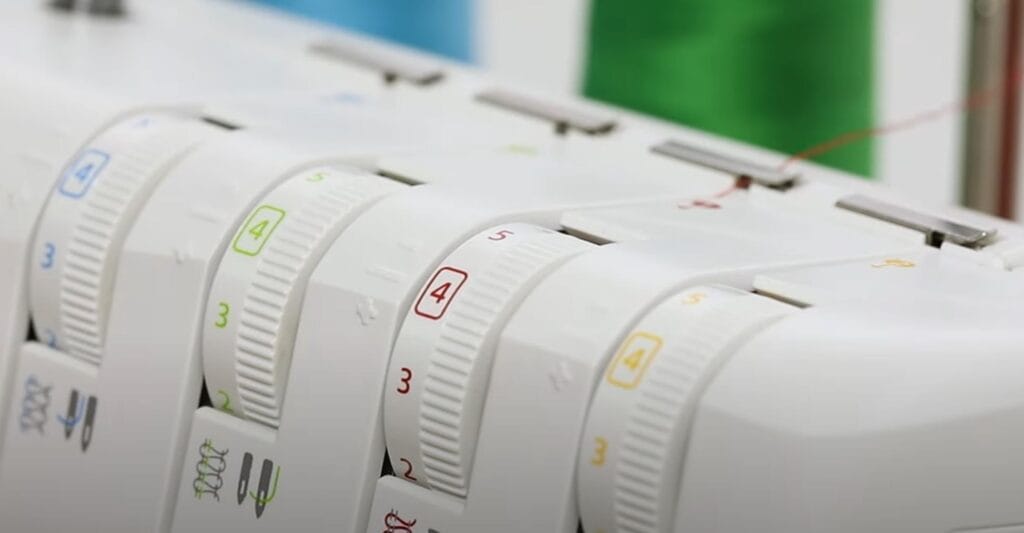
If you have never used a serger, threading can look complicated. The S14-78 makes the process more manageable with clear color-coded guides. Follow the manual order carefully (upper looper, lower looper, right needle, then left needle). After a few successful rethreads, it becomes a routine instead of a puzzle.
Controls are mostly dials and sliders: front tension dials, plus controls for stitch length, cutting width, and differential feed. Those small adjustments matter a lot once you change fabric weight or thread brand. The layout is functional and does not require much guesswork after the first practice session.
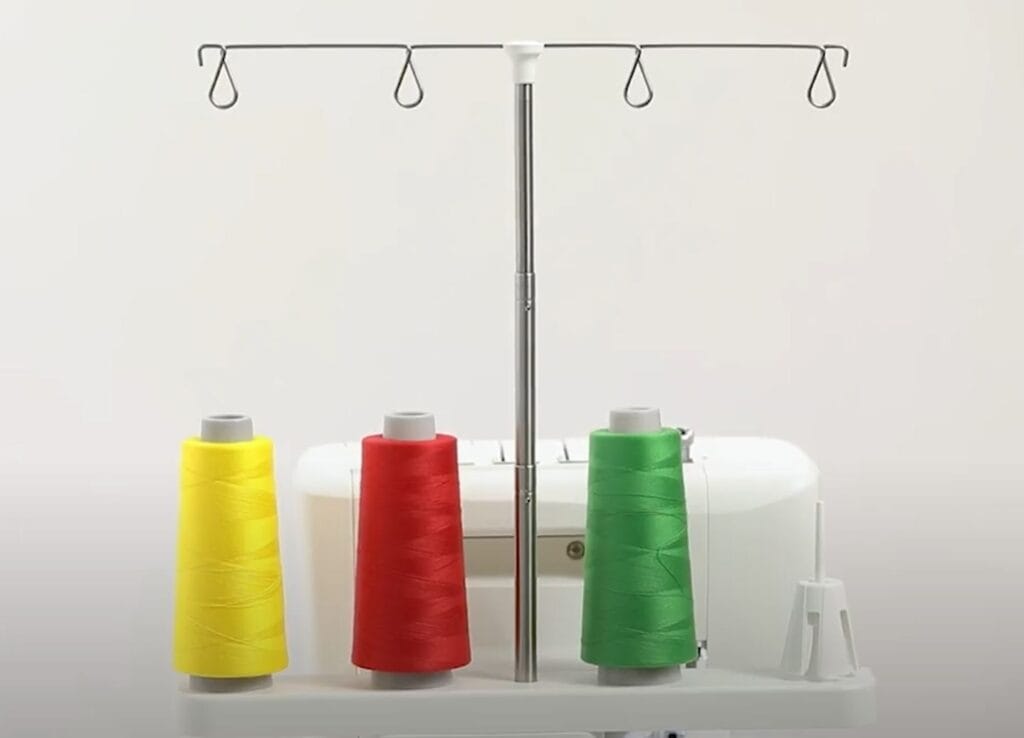
Typical starter accessories include an all-purpose / overlock presser foot, tweezers for looper threading, extra needles, screwdrivers, a 2-thread converter on many kits, and thread cone adapters. It is not a huge accessory bundle, but it is enough to start finishing seams right away. Extra specialty feet can be bought later if you need them.
Performance
One of the S14-78’s strengths is how well it adapts across fabric types. Differential feed helps stop rippling on knits and accidental gathering on sheers. Push the setting the other way and you can create intentional ruffles or lettuce hems for kids’ clothes, costumes, or decorative edges.
Whether you are finishing the inside of a linen top or edging a fleece blanket, stitch quality stays clean when tension is balanced. The cutting blade keeps the edge tidy in the same pass. Rolled hems are relatively easy to set up and usually need only light fine-tuning.
Once threaded correctly, the machine runs smoothly and feels reliable on cotton, knits, and fleece. Noise is reasonable for home use, and it keeps up at speed without excessive vibration. Tension still takes trial and error with new thread or fabric, which is normal for sergers. Dial it in, and stitch consistency is solid.
It is not the best choice for bulk work on heavy denim or canvas. For typical home garment and craft finishing, it performs well. The free arm is a clear improvement over the older 14SH754 when you serge sleeves, pant legs, or small circular pieces.
Approximate size is about 11.3″ W x 13.1″ H x 11.0″ D (roughly 29 x 33 x 28 cm), and weight is around 14 lb (about 6.3 kg). That is portable enough to move around the house, yet stable on the table while you sew.
Strengths and limitations
Strengths
- 2/3/4-thread flexibility for seams, finishes, and rolled hems
- Differential feed handles knits and light fabrics well
- Color-coded threading is beginner-manageable with practice
- Free arm and LED light improve on the older 14SH754
- Strong mid-range value for everyday home finishing
Limitations
- Threading and tension still take patience if you are new to sergers
- Not built for heavy bulk denim or canvas production
- Accessory kit is basic rather than expansive
- No air threading or other premium convenience systems
- Listed top speed varies slightly by retailer (about 1,200 to 1,300 SPM)
Who it is for
Best for beginners buying a first serger and for intermediate sewists who want a dependable machine dedicated to seam finishing. Also a sensible upgrade if you already own a 14SH754 and want the free arm and LED light. Skip it if you need an industrial-style heavy serger, or if you specifically want air threading and are ready to spend more for that convenience.
Manuals, warranty, and registration
Manuals: Find manuals at support.singer.com/manuals. Many Heavy Duty models also have an in-app Quick Start Guide in the Singer sewing app.
US: US limited warranty for many home machines is commonly 25 years on the machine head, 2 years on electrical components, and 90 days on adjustments (confirm for your model). Overview: Singer warranty coverage. Register at singer.registria.com.
UK / EU: UK: Register at singerco.co.uk/register-singer.php and confirm warranty terms with your retailer/importer. EU: use your national Singer / SVP support channel; terms vary by market.
Official site: Singer.
Verdict
The Singer S14-78 offers a lot at its price point: adjustable settings, solid speed, and enough stitch variety for most home sewing needs. It takes a little patience to learn the threading system and tension controls, but once you are comfortable with it, the machine becomes a dependable part of your sewing setup.
If you are coming from the 14SH754 or shopping for your first serger, the S14-78 is a well-rounded choice. It does not try to be high-end, but it does what it sets out to do, and it does it well.