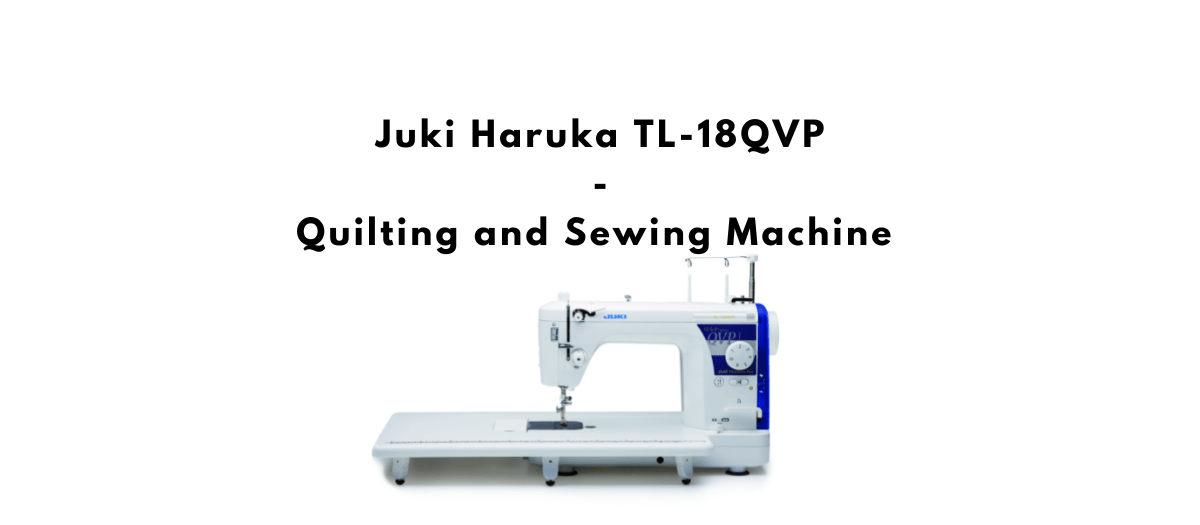
The Juki Haruka TL-18QVP is a semi-industrial, straight-stitch-only machine that quilters and serious home sewists often buy for one job: fast, consistent straight stitching. The steel rotary hook is a big part of that reputation. If you make quilts, bags, or garments and spend a lot of time on plain seams, this kind of machine can sit beside a multi-stitch model and take over the heavy lifting.

Juki lists a US suggested retail price of $2,299 for the TL-18QVP. Dealer pricing is often lower, so confirm the current figure in the product box or with an authorized dealer.
About Juki
Juki has built sewing machines since 1938. The Japanese brand is best known for tough industrial equipment, and that background shows up in their home and quilting range. The TL-18QVP sits in that middle ground: portable enough for a home studio, but set up more like a workshop tool than a beginner hobby machine.
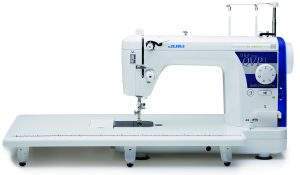
Key features
This is not a stitch sampler. There are no decorative stitches or zigzags here. What you get is a single-needle lockstitch machine built around speed and control, with a few extras that matter once you sew for hours at a stretch.
Heel-operated thread trimmer
The remote thread cutter is controlled with your heel on the foot pedal. One press trims the thread so you can keep both hands on the work. On long piecing or quilting sessions, that small habit saves a lot of reaching for scissors.
Float function (micro-lifter)
The float function raises the presser foot slightly above the fabric (0 to 2 mm / up to about 1/16″). That helps when you hit bulky seams, layered quilts, or fabrics that mark or drag under a fully lowered foot. It also helps during free-motion work because the fabric can move with less fight. In real use, it is one of the more practical details on the TL-18QVP.
Other controls that matter day to day
- Needle up/down for cleaner pivots at corners
- Dual tension system for thicker or specialty threads
- Automatic needle threader to cut down on eye strain
- Speed control from 55 to 1,500 stitches per minute
- Knee lift so you can raise the foot without letting go of the fabric
- Adjustable presser foot pressure for different fabric weights
None of these are flashy on their own. Together, they make long sewing sessions feel more controllable, especially when you are switching between piecing, quilting, and thicker bag work.
Specifications
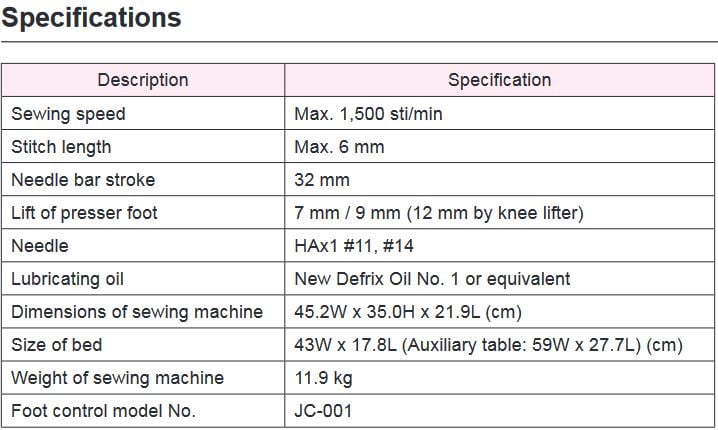
Stitch length runs from 0 to 6 mm (0 to about 1/4″). Top speed is 1,500 stitches per minute. The presser foot lifts up to 12 mm (about 1/2″) with the knee lever (and less with the hand lever). Juki rates the machine for domestic-style needles such as HA×1 (130/705H) / HL×5 in sizes #9 to #18, not industrial DBx1 needles.
An extension table comes with the machine and gives you more room for quilts or large pieces. The body is a die-cast aluminum frame, so it has real weight and stays planted while you sew. Official figures put the machine at about 25.4 lb (11.5 kg) without the table, so it is portable in the “move it to another room” sense, not the “toss it in a tote bag” sense.

Accessories
The included feet lean toward quilting and precise piecing:
- Walking foot with guide for straight-line quilting and even feeding
- Free-motion feet, including standard and open-toe versions for better visibility
- Patchwork foot with edge guide for chain piecing
- Compensating foot, a spring-loaded quarter-inch foot that helps on thicker edges
- Quarter-inch and eighth-inch feet for tighter seam control
The feet feel like commercial-grade parts rather than flimsy extras. That helps if you want to start quilting or precision piecing without buying a pile of attachments on day one. Extra options are listed on the Juki website if you want to expand later.

Strengths and limitations
Where this machine earns its keep is straight-stitch quality at speed, stable handling of thicker seams with the float function, and a quilting-friendly accessory pack. The heel trimmer and knee lift are the kind of features you notice after a long afternoon at the machine.
The main limitation is built into the design: it only does straight stitch. If you need zigzag, stretch stitches, buttonholes, or decorative work, you still need another machine. It is also heavier than a typical beginner model, and because it can run very fast, newer sewists may need time to get comfortable with the speed range.
Who it suits, and the verdict
The TL-18QVP makes the most sense for quilters, bag makers, and sewists who already know they want a dedicated straight-stitch workhorse. It is less of a first machine and more of a specialty upgrade, or a second machine next to an all-purpose model.
For clean, precise straight seams at speed, with useful quilting controls and a solid set of feet in the box, the Haruka TL-18QVP is a strong choice. Just buy it for what it is: a focused straight-stitch machine, not an all-in-one.
Manuals, warranty, and registration
Manuals: Download manuals from jukihome.com or your regional Juki distributor. Where available, also download the Quick Reference Guide, Quick Start guide, or sewing guide for your model.
US: US warranty and registration typically run through authorized Juki dealers or the seller. Keep your dated receipt.
UK / EU: Confirm warranty and registration with your national Juki distributor or authorized dealer.
Official site: Juki Home.
Very good review but ,Will this work in the uk or will you need to buy a converter as it’s imported from USA
yes, you’ll require a Step Down power adapter and converter. The U.S. operates on 110 volts while the UK uses 240 volts. Additionally, the plug shapes differ between the two countries. A combined power adapter and converter will both adjust the voltage for your device and change the plug shape to fit. While some devices can handle both voltages, it’s safer not to take chances (and I’m not sure about this specific machine). Ensure you get a Step Down converter, not a Step Up. A Step Up converter is for UK devices being used in the U.S.