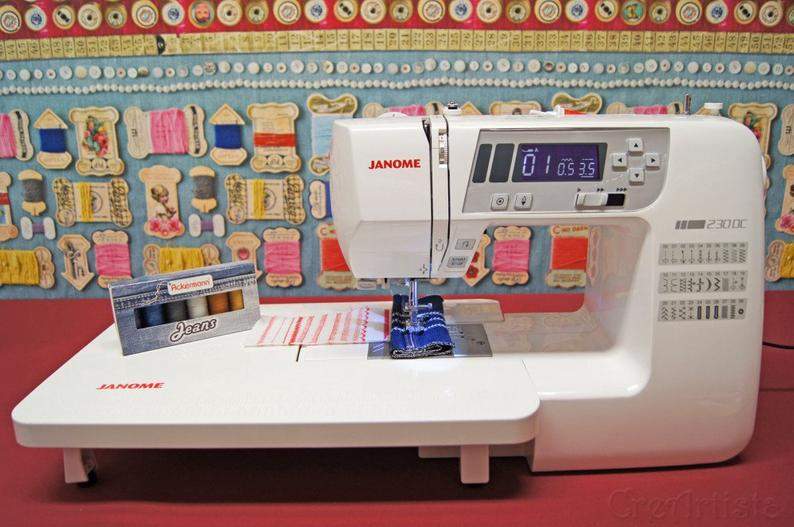
The Janome 230DC is a compact computerized sewing machine with stronger needle penetration than many basic models, so it handles multiple layers of denim more confidently than a typical starter machine. It is still approachable for beginners, and it has enough controls and stitches that more experienced sewists will not feel boxed in right away. This review covers features, setup, sewing behavior, and who the 230DC actually suits.
In the US, treat dollar pricing as fluid. Check the product box above for the current figure rather than relying on a printed list price.
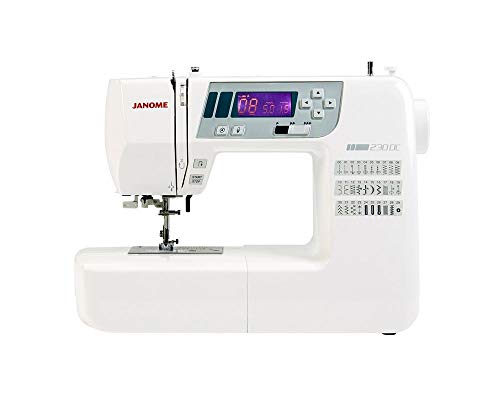
Main features
- 30 built-in stitches
- 3 one-step buttonhole styles
- Built-in needle threader
- Drop feed for free-motion work
- Adjustable stitch length and width
- Speed control slider
- Start/stop button and needle up/down
- Top-loading bobbin
- Extension table and hard cover
Setup and ease of use
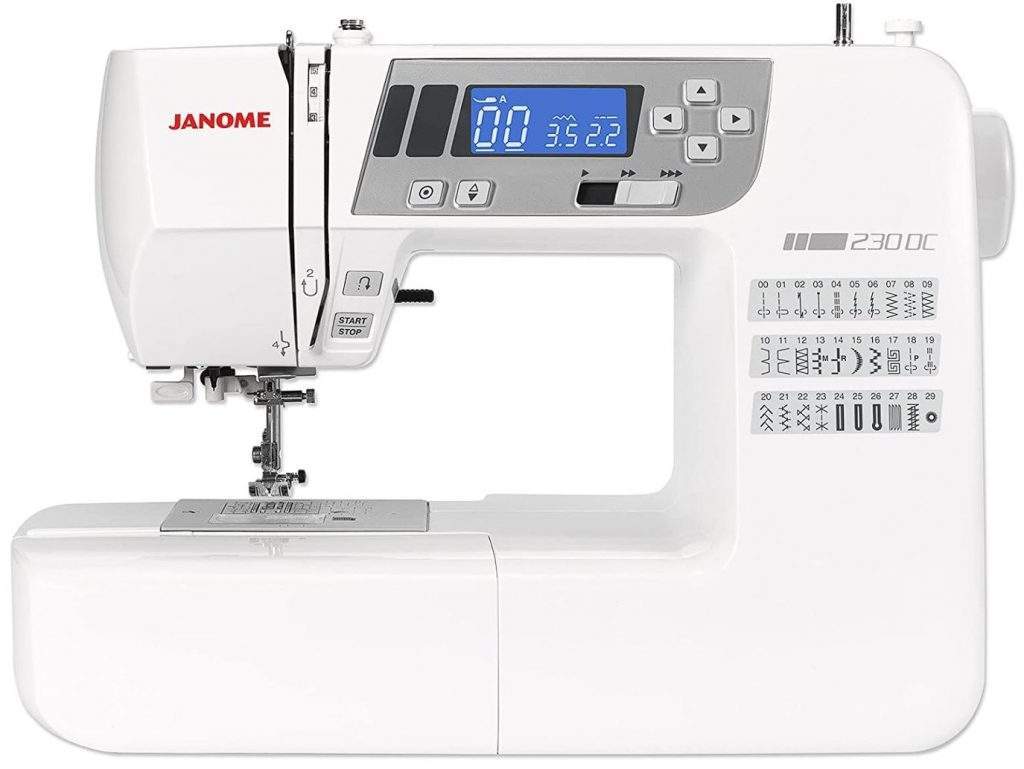
Despite the computerized label, the 230DC is simple day to day. Stitch selection is button-based, and length and width adjustments are clear. The LCD shows the selected stitch, length, width, and the recommended presser foot, which cuts down on guessing when you change tasks.
If you are moving from a mechanical machine, the learning curve is gentle without feeling sparse. Experienced users get smooth, predictable controls without a long menu to dig through. The built-in needle threader speeds setup, and the top-loading bobbin is easier to watch and reload than a front-loading case. Bobbin winding works best with the speed slider set high.
Stitches, buttonholes, and feet
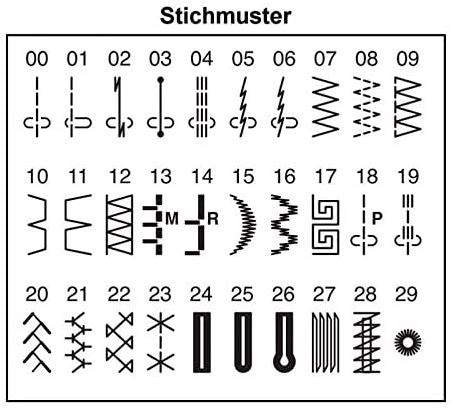
You get 30 built-in stitches: utility options plus decorative and quilting-friendly patterns. Maximum stitch length is 5 mm (about 3/16″) and maximum stitch width is 7 mm (about 1/4″). Three one-step buttonhole styles, including a keyhole option, sew neat, consistent results when the buttonhole foot is set up correctly.
Models such as the Janome GD8100 offer far more decorative stitches. On the 230DC the smaller set is still practical for garment sewing, craft work, and light quilting. You do not need a huge stitch library for solid everyday sewing.
Six snap-on Category B feet come standard:
- Standard foot (A)
- Zipper foot (E)
- Overedge foot (C)
- Satin stitch foot (F)
- Automatic buttonhole foot (R)
- Blind hem foot (G)
That covers general sewing, basic garment work, and decorative stitching. Specialty feet such as a ribbon/sequin foot are optional extras if you need them later.
Performance
Top speed is about 820 stitches per minute. The speed slider caps that maximum and works with the foot pedal, which helps on curves, corners, and precise seams. A start/stop button lets you sew without the pedal if you prefer, and needle up/down helps when pivoting or placing applique.
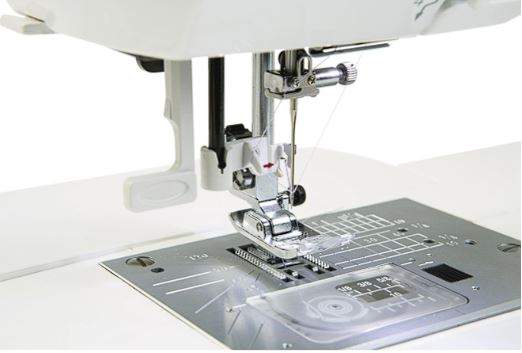
The 35W DC motor has enough punch for most home fabrics, including several layers of denim, when you use an appropriate needle. It is not a dedicated leather or heavy industrial machine, so thick leather still needs careful setup and realistic expectations. Adjustable presser foot pressure and a 7-piece Superior Feed System help keep feeding even across light to medium-heavy fabrics.
Arm space is about 6.7″ (170 mm) to the right of the needle, which is enough for garments and craft projects but tighter for large quilts without the extension table. With the table attached (about 18″ x 10″ / 46 x 25 cm), flat work is more comfortable.
Build, accessories, and warranty
Janome’s reputation for solid home machines holds up here. Approximate weight is 12.6 lb (5.7 kg): light enough to carry to class, stable enough on the table. Machine size is about 16.1″ W x 11.8″ H x 6.7″ D (410 x 300 x 170 mm). An aluminum die-cast body and metal needle plate give it a sturdier feel than all-plastic budget models.
Included accessories typically cover an extension table, hard cover, lint brush, screwdriver, seam ripper, spool base, large and small spool caps, spool felt, spare spool pin, bobbins, needles, and foot control. That is enough to start sewing without an immediate accessory run.
Warranty length varies by region and dealer. Confirm coverage with the seller before you buy, especially if you are ordering across markets.
Strengths and limitations
Strengths: clear LCD with foot guidance, top-loading bobbin, speed control plus start/stop, solid stitch quality for everyday work, useful included table and hard cover, and enough power for denim layers with the right needle.
Limitations: only 30 stitches if you want a large decorative library, modest throat space for big quilts, and no substitute for a true heavy-duty or leather-focused machine on very thick stacks.
Who it suits
The 230DC fits beginners who want computerized convenience without a huge feature list, and intermediate sewists who need a dependable machine for garments, home sewing, and light quilting. If you mainly want hundreds of decorative stitches or a wide quilting throat, look further up the Janome range.
Manuals, warranty, and registration
Manuals: Ask an authorized Janome dealer for your model’s instruction book, or check regional Janome support for downloadable manuals. Where available, also download the Quick Reference Guide, Quick Start guide, or sewing guide for your model.
US: US warranty service typically runs through authorized dealers. See janome.com/support/warranty and register via the link on that page. Keep your dated receipt.
UK / EU: UK / Ireland: Most machines are described with a 2-year parts and labour warranty; extended options may be available via janome.co.uk/extended-warranties. EU: follow your national Janome distributor’s warranty and registration process.
Official site: Janome.
Verdict
The Janome 230DC remains a well-rounded mid-range computerized machine: friendly controls, steady build, and a practical stitch set for real projects. The top-loading bobbin, speed slider, and clear LCD make daily sewing less fiddly, and the included accessories mean you can sew on day one. For the features you get, it is still good value when the current dollar price looks reasonable in the product box.
If you had a choice between a Janome 230DC and a Brother fs130qc – which would you go for?
Can’t go wrong with either, they are both very solid machines. However i would probably go with the Brother fs130qc.
Hey. What’s the motor power on this? I’m considering this and brother FS100, I’m an advanced beginner
Hi Kat! the Janome 230DC has a 35W DC Motor, will update the post to include this information.
Hi Jacqueline I wanted to ask about the Janome 230dc generally and versus the 725s which seems to always get on reviewers listings. Is there a difference between the two in performance?
I’m upgrading from my original 1971 Elna lotus – too many bobbin issues, and it feels a bit cramped working on it now and underpowered on thick layers of material. I’ve just made a quilted advent calendar on it – after all those pockets think it would be divine to have a scissors button on my next machine! However the Janome ones come in quite expensive for that extra, and I imagine it’s most handy for larger quilting projects, though I’m sure you could get used to having it all the time!
Generally I don’t do a lot of regular sewing – some mending and repurposing, a bit of crafting for gifts; I might run up a skirt or top – but it’s not a frequent thing. Computerised seems to make it easier to not make mistakes – like still having your stitch width on for straight sewing! I have tried the Janome once or twice and it’s definitely a step up on what my Elna can do. More light and space would be good but I think all models have the same until you get to the more expensive and long throat models?
It’s confusing having so much choice and easy perhaps to overbuy so am grateful for your help.