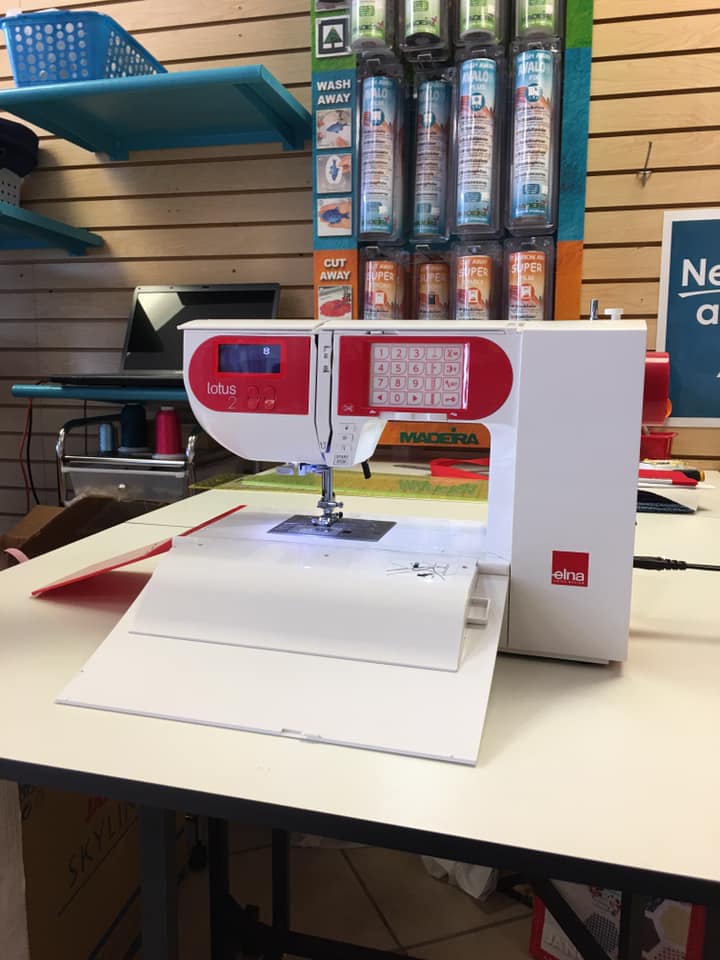
Plenty of sewists still know the original Elna Lotus from 1968. It was compact, clever, and built to last, which is why so many vintage examples are still stitching. For the model’s 50th anniversary, Elna released the Lotus 2: same fold-out hard-case idea, updated electronics, and a brighter red finish. The goal is a portable machine that still feels practical for real home sewing, not a toy that only looks cute on the shelf.
This review covers what the Lotus 2 offers, how setup feels, how it sews, and who it suits. Street pricing in the US changes by retailer, so check the product box below for the current dollar price.

Key Features of the Elna Lotus 2
Design and Core Specs
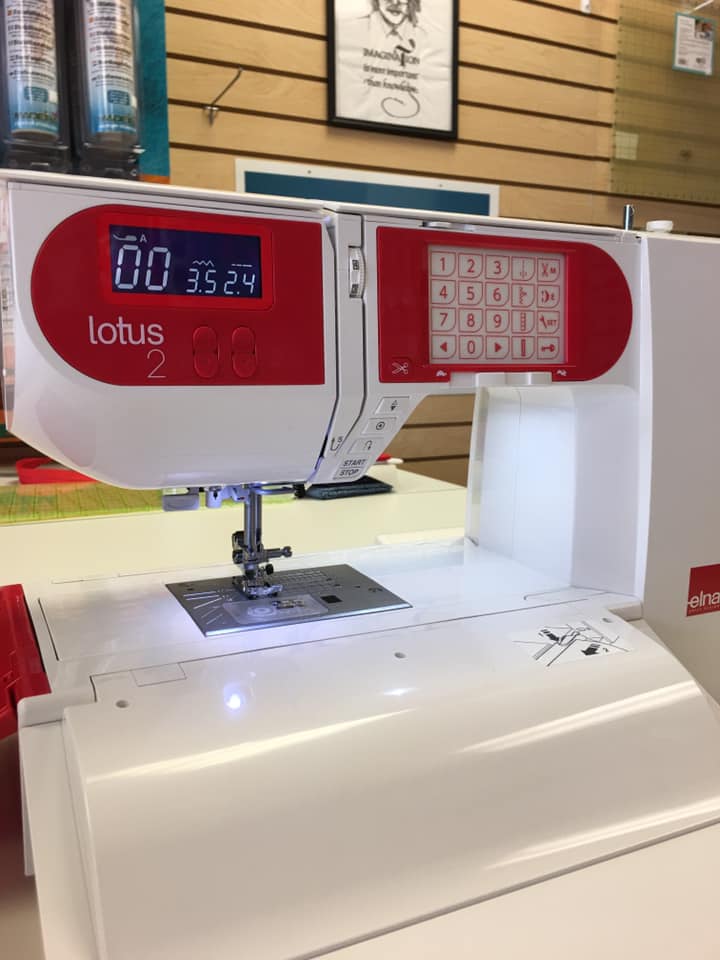
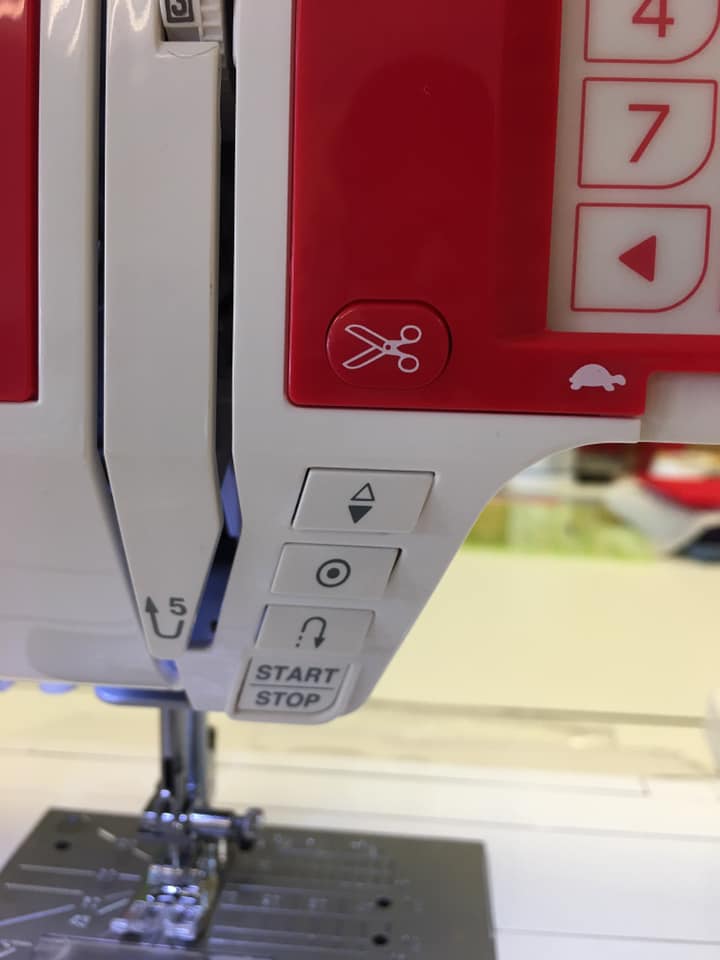
The Lotus 2 is a computerized sewing machine with digital stitch selection and the usual one-touch controls (start/stop, reverse, lock stitch, needle up/down, and an automatic thread cutter). The signature detail is still the built-in hard case: the side flaps fold out into an integrated sewing table, then fold back in for storage or transport.
Elna lists 100 built-in stitches, including 7 one-step automatic buttonholes. Maximum stitch width is 7 mm (about 1/4 in) and maximum stitch length is 5 mm (about 3/16 in). Top speed is 820 stitches per minute, with 15 needle positions for finer placement. Sewing space is 162.5 x 110 mm (about 6.4 x 4.3 in). Closed, the machine measures 426 x 298 x 155 mm (about 16.8 x 11.7 x 6.1 in) and weighs 8.2 kg (about 18.1 lb).
The needle bar sits toward the center and closer to the front edge than on many compact machines. That layout makes it easier to steady fabric with both hands on thicker seams, slippery cloth, or awkward corners.
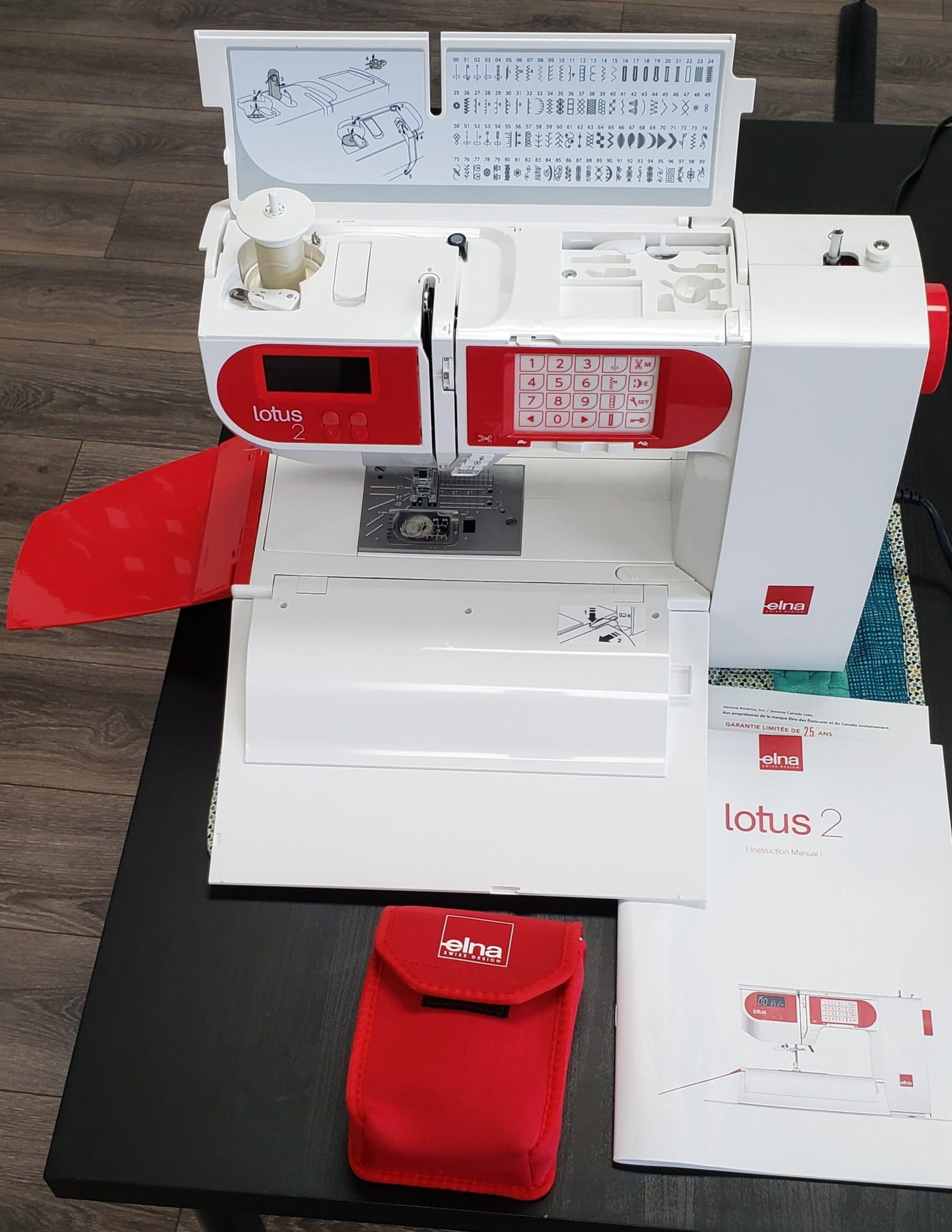
Official brochure and instruction manual from Elna USA: Lotus 2 brochure (PDF) and instruction manual (PDF).
Carrying Case, Size, and Free Arm
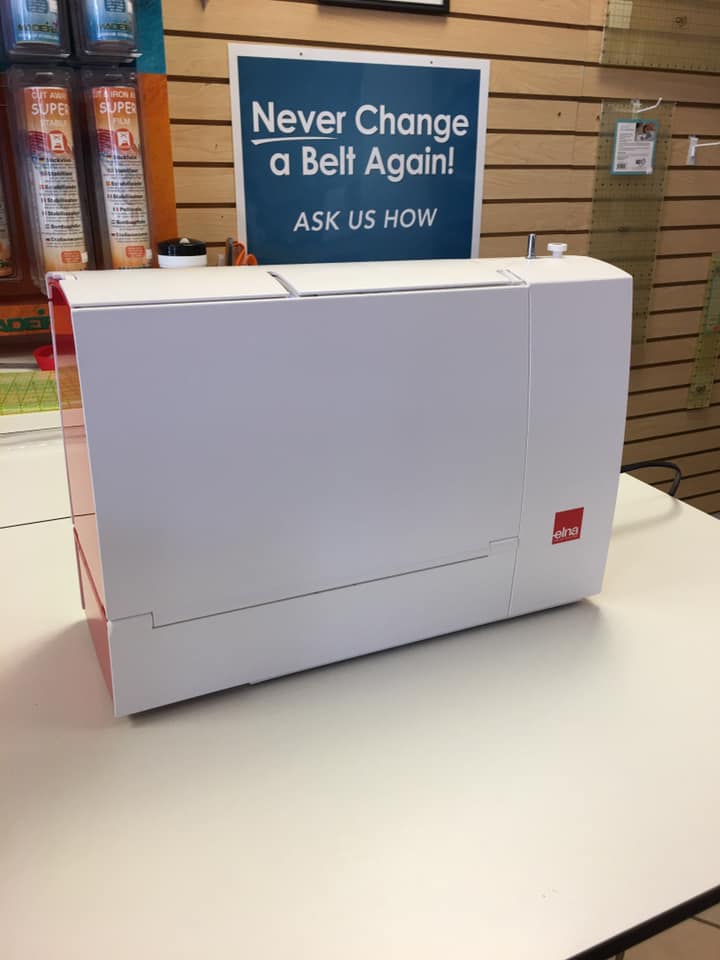
When you finish sewing, the flaps fold in to form a rigid case with a built-in handle. That is the main reason people buy this machine: it travels to class or moves between rooms without needing a separate hard cover.
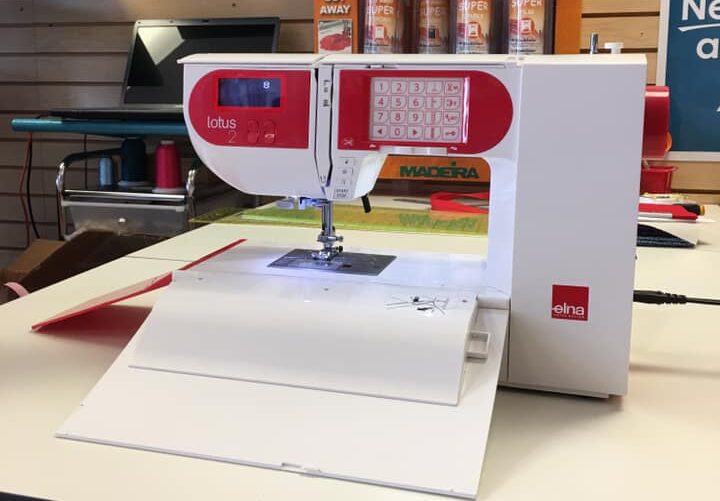
With the flaps open, you get a flat support surface that is more usable than many bare portable beds. Remove the flaps and you have a free arm for cuffs, sleeves, and other tubular pieces. It is not a large quilting harp, but for garment work and everyday projects the fold-out table is a genuine advantage over typical suitcase machines.
Controls Worth Using Daily
The automatic lock (knot) stitch finishes a seam so the ends are less likely to unravel. Needle up/down helps when you pivot at corners or hold fabric in place between stitches. Reverse reinforces starts and ends the usual way. Start/stop sewing without the foot pedal is handy for longer seams or if you prefer hand control of speed via the slider.
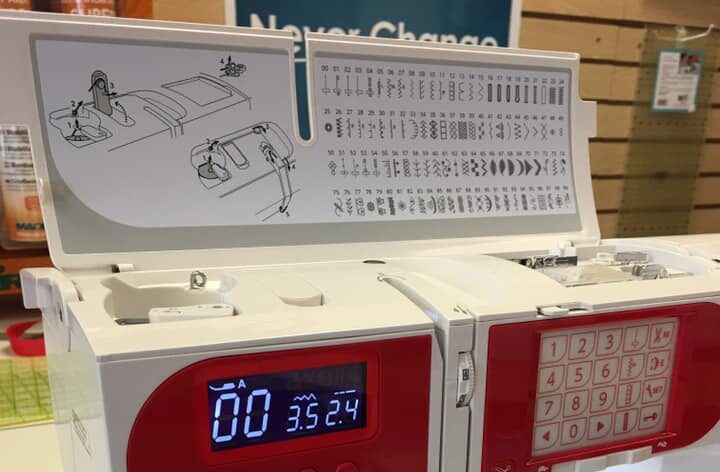
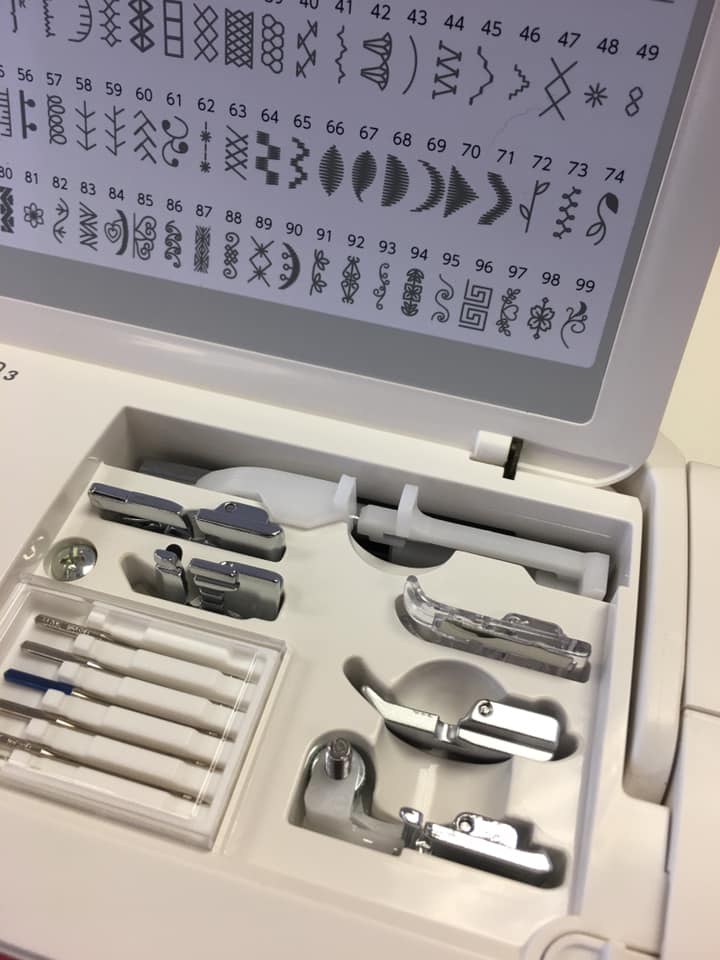
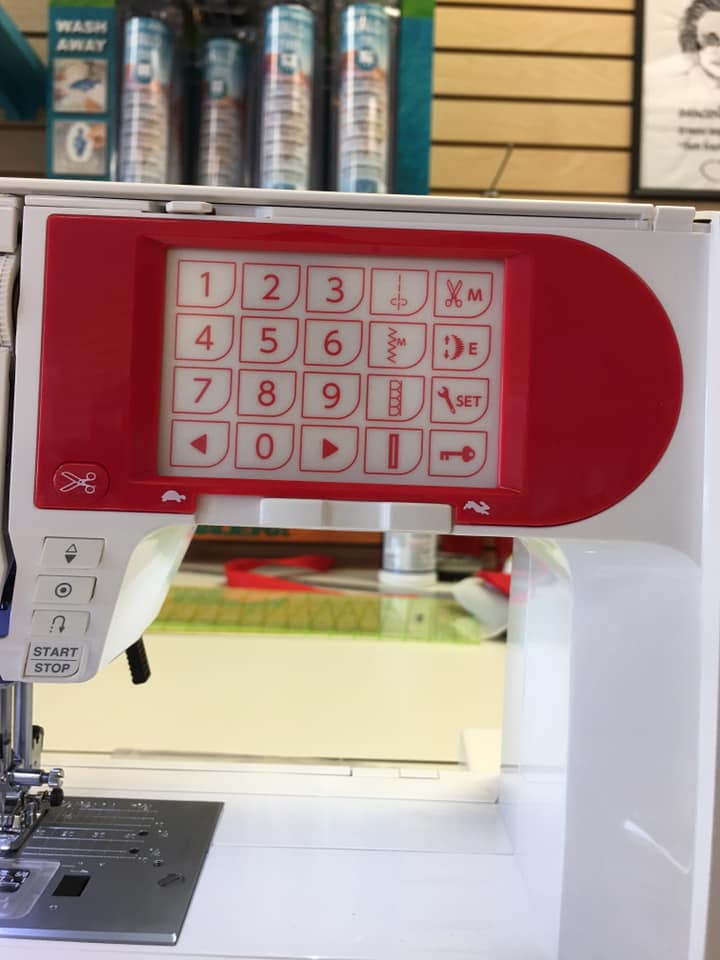
Stitch selection uses a simple keypad layout, with quick access to frequently used patterns. The top cover holds a printed stitch chart and threading diagram, so you are not hunting through a booklet every time you want a new stitch.
LCD Screen and Threading Aids
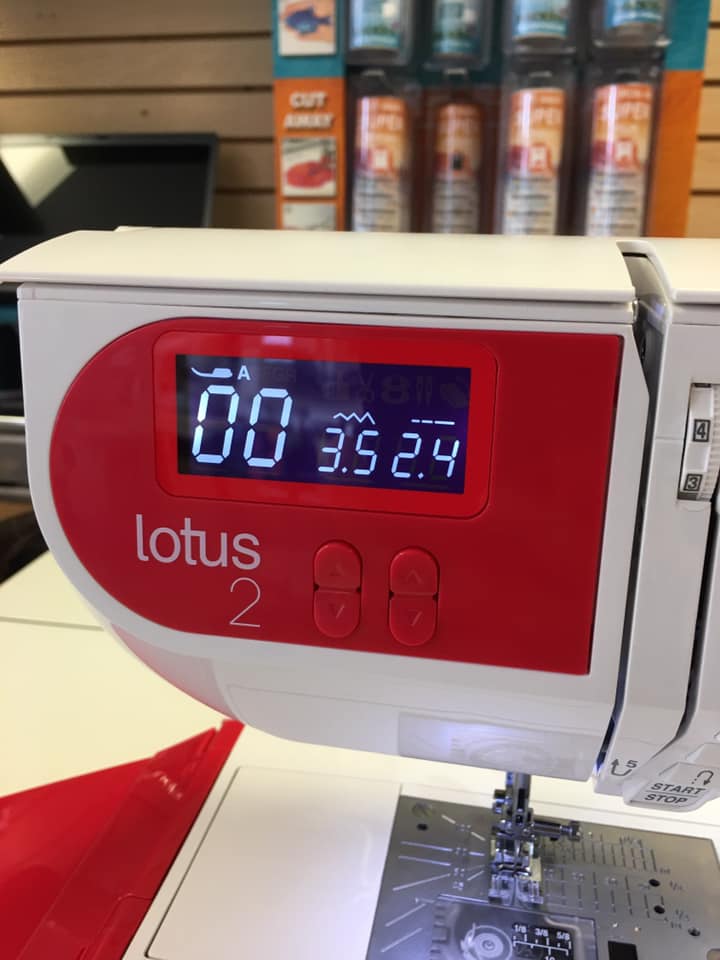
The LCD is small (about 62 x 27 mm / 2.4 x 1.1 in), but it shows the stitch number, length, width, and recommended presser foot. That is enough for day-to-day work. Threading is helped by a built-in needle threader, a horizontal rotary hook with a clear bobbin cover, and an automatic thread cutter after stitching.
Thread tension is manual, which means you adjust a dial rather than relying on an automatic sensor. Once you learn the usual settings for cotton, knits, and heavier cloth, that is straightforward. Presser foot pressure is also manual, and the foot lifts to an extra-high position for bulkier layers.
Feed, Feet, Lighting, and Accessories
A 7-piece retractable feed dog moves fabric under the needle and can be dropped for free-motion work. Clip-on presser feet swap without tools. Two LED lights brighten the needle area. Accessory storage sits in the front flap and top cover, so bobbins and feet stay with the machine instead of in a separate box.
Included accessories (per Elna):
- Standard foot A
- Rolled hem foot D
- Zipper foot E
- Satin stitch foot F
- Blind hem foot G
- Multi-cord foot H
- Automatic buttonhole foot R
- 5 bobbins
- Seam ripper, needle set, lint brush
- 1 large and 1 small spool holder
- Screwdriver, foot controller with pouch
Setup and Ease of Use
Getting started is mostly about unfolding the flaps, placing the machine on a stable table, winding a bobbin, and following the marked threading path. The vertical spool pin draws out for use, then tucks away so it is less likely to snap in transit. The auto-declutch bobbin winder is standard Janome/Elna fare and easy to learn.
If you are new to computerized machines, the LCD and on-cover stitch chart shorten the learning curve. You still need to match needle and thread to fabric, and you will adjust tension by hand when you change materials. None of that is difficult, but it is more “learn the dials” than “set and forget.”
Speed control is a slider plus optional foot pedal. Slow the machine down for buttonholes, curves, or thick seams; open it up for long straight runs. Two LEDs help in dimmer rooms, which matters more than it sounds when you sew in the evening.
Sewing Performance
For everyday garment sewing, mending, crafts, and light decorative work, the Lotus 2 has enough stitch choice and control. Utility stitches, buttonholes, and a mix of decorative patterns cover most home projects. The centered needle position and multiple needle placements help keep topstitching and zippers lined up.
The extra-high presser foot lift and solid feed help with denim hems, fleece, and other bulky spots, within reason. This is still a compact home machine, not a dedicated heavy-duty or large-throat quilting model. Drop the feed dogs for free-motion work if you want, but the sewing space is modest, so large quilts are not its natural job.
At 820 spm it is quick enough for home use without feeling frantic. Noise is typical for a mid-size computerized machine: audible, but not harsh when the machine is threaded and oiled as directed. Keep the bobbin area clean; horizontal rotary hooks collect lint like any other modern machine.
Strengths and Limitations
Strengths: The fold-out hard case and integrated table are still the smartest part of the design. Portability without a separate cover matters if you sew in more than one place. One-touch controls, needle threader, thread cutter, free arm, and a clear accessory kit make daily sewing less fiddly. One hundred stitches plus seven buttonholes is a solid mid-range library for garments and crafts.
Limitations: Throat space is compact, so this is a poor main machine for large quilts or wide home-dec panels. Tension and foot pressure are manual, which some buyers expect to be automatic at this price tier. There is no alphabet or large color touchscreen. Availability and street price in the US can vary, and you should confirm warranty terms with the seller.
Who the Lotus 2 Suits Best
Choose the Lotus 2 if you want a portable, self-contained machine for classes, apartments, or shared spaces, and you sew garments, mending, bags, and smaller projects more often than king-size quilts. Newer sewists will appreciate the labeled threading, stitch chart, and one-touch buttons. More experienced sewists who already like Elna/Janome handling will recognize the controls quickly.
Look elsewhere if your priority is a wide throat for quilting, automatic tension, embroidery, or a huge decorative stitch library. Those buyers are better served by a larger eXcellence or dedicated quilting model.
Final Verdict
The Elna Lotus 2 still makes sense for the same reason the original Lotus did: it packs a usable sewing surface and everyday computerized features into a case you can actually carry. It does not try to replace a full-size quilting machine. What it does well is make home sewing easier to start, pack away, and take to class, without stripping out the controls that keep stitch quality under your control.
Manuals, warranty, and registration
Manuals: Find manuals via elna.com or your regional Elna distributor / dealer. Where available, also download the Quick Reference Guide, Quick Start guide, or sewing guide for your model.
US: US warranty and registration are usually handled by the authorized seller or Elna distributor. Keep your dated receipt.
UK / EU: Confirm warranty and registration with your national Elna importer or authorized dealer. Terms vary by market.
Official site: Elna.