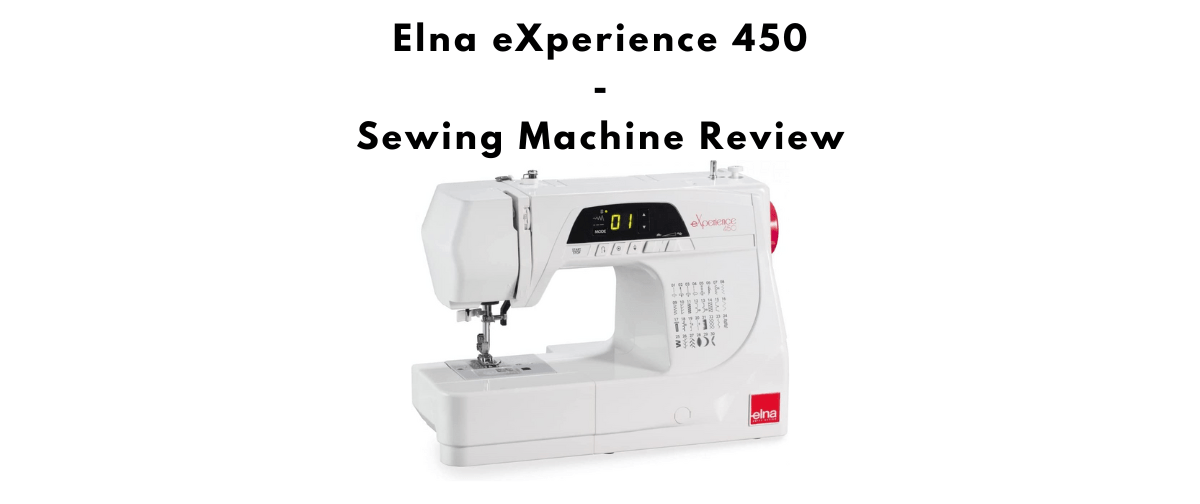
The Elna eXperience 450 is a computerized starter machine built for beginners. It covers the basics well, with enough stitches and controls to support learning without burying you in menus. As the entry point of Elna’s eXperience lineup, it still gives a reliable foundation for everyday sewing, simple garments, and craft projects.
It is a solid pick if you are getting started or returning to sewing after a break. The machine stays affordable, easy to operate, and focused on essentials. US pricing varies by dealer and retailer, so check the current dollar price before you buy.

Key Features of the Elna eXperience 450
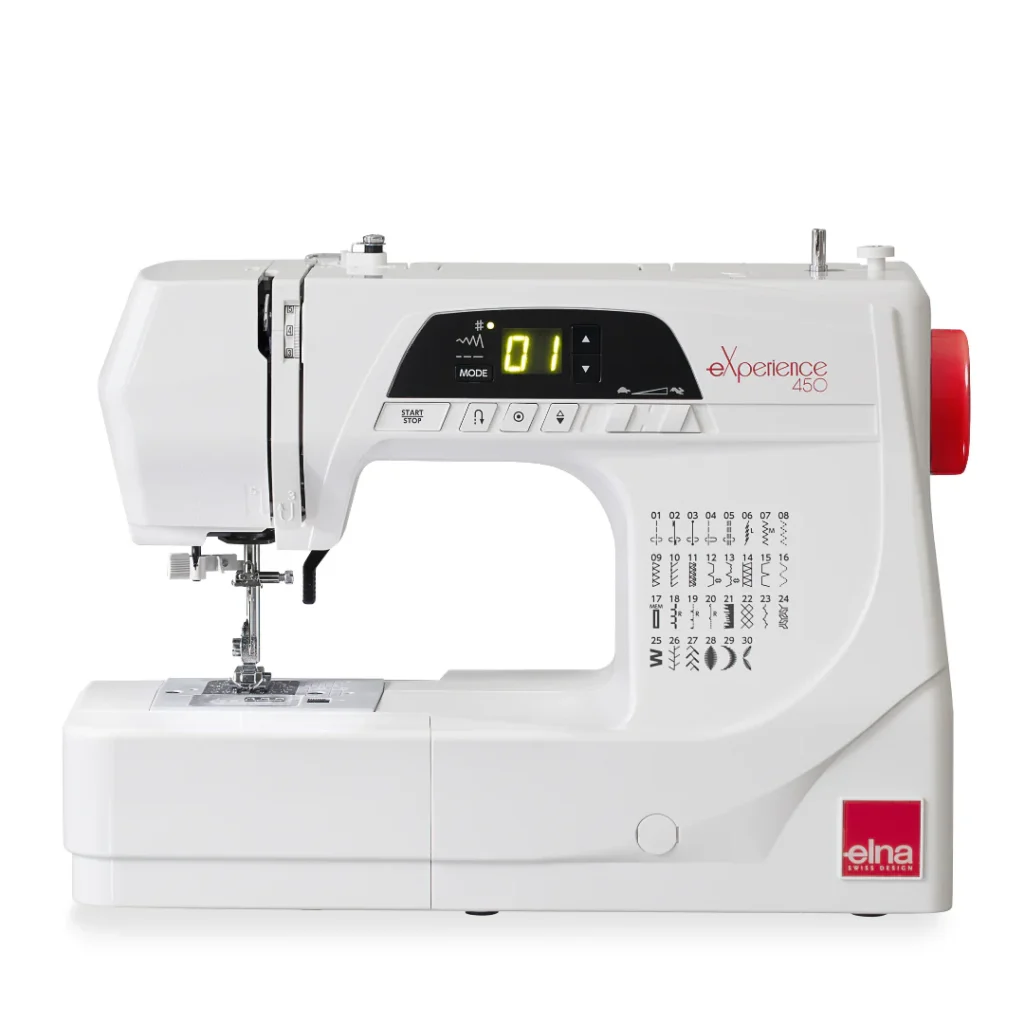
Computerized control is what sets the 450 apart from many mechanical beginner machines. Official highlights include:
- 30 built-in stitches (utility and decorative) plus 1 four-step memory buttonhole
- Maximum stitch width 5 mm (about 3/16 in); maximum stitch length 4 mm (about 5/32 in)
- Sewing speed up to 820 stitches per minute with a speed control slider
- Sewing space about 158.5 mm (roughly 6.2 in); free-arm configuration
- Machine size about 385 x 282 x 150 mm (roughly 15.2 x 11.1 x 5.9 in); weight about 5 kg (11 lb)
- 2-digit LCD screen, 4 direct-access function buttons, built-in needle threader, 1 LED light
- Horizontal rotary hook with transparent bobbin cover; 4-piece retractable feed dog
- Start/Stop, reverse, automatic lock stitch, needle up/down, and carrying handle
Controls stay simple: Start/Stop, reverse, lock stitch, and needle up/down are clearly labeled. Manual thread tension and manual stitch width/length keep the interface honest for learning. The free arm helps with sleeves and pant hems, and accessory storage sits in the free-arm cover.
Stitches
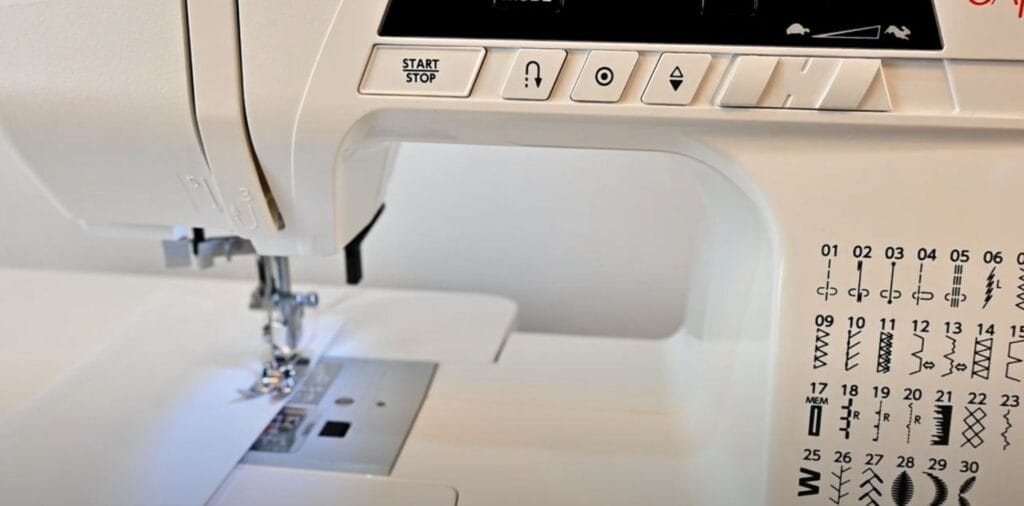
Thirty stitches are enough for most basic projects: everyday seams, a few stretch options, and decorative patterns for simple accents. You set stitch number on the 2-digit LCD rather than tapping dedicated stitch keys, and there is no stitch memory for saved combinations. For most beginners that is fine; it mainly matters if you switch settings constantly.
The four-step buttonhole is straightforward, though slower than a one-step buttonhole on pricier models. It still produces a clean result once you practice the sequence.
Accessories
Typical presser feet in the box cover beginner needs:
- Standard foot (A)
- Zipper foot (E)
- Satin stitch foot (F)
- Sliding buttonhole foot (J)
Other usual inclusions are bobbins, a seam ripper, needles, large and small spool holders, an extra spool pin for twin-needle work, a screwdriver, a lint brush, and a foot controller. There is no hard cover or extension table in the standard kit, but the essentials are enough to sew right away.
Setup and Getting Started
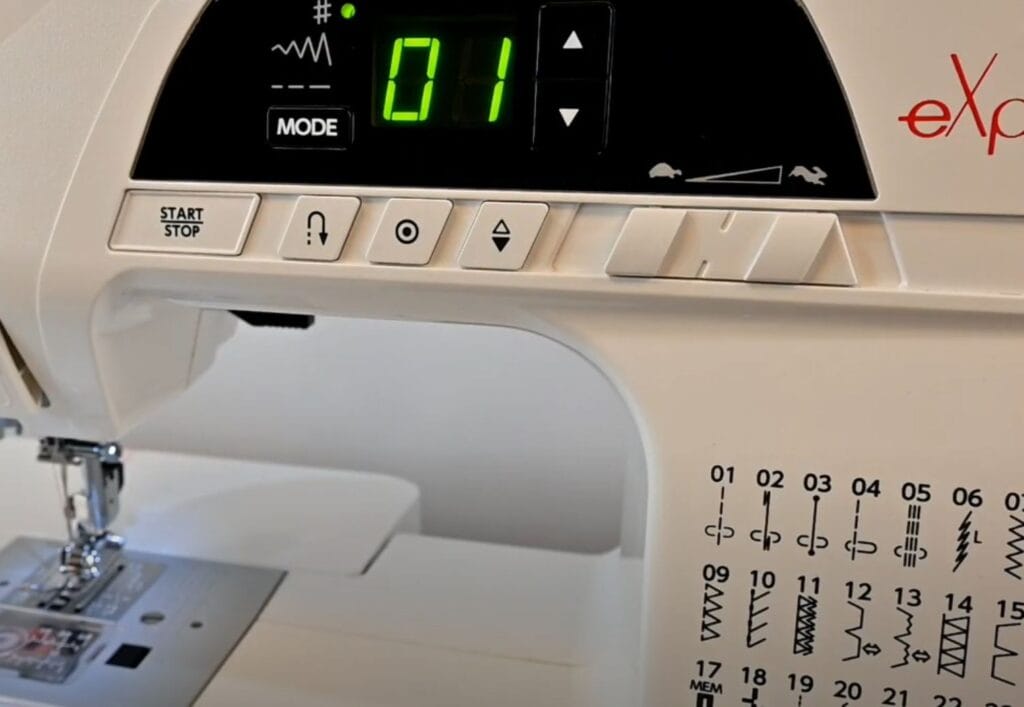
Threading and bobbin winding follow a clear path for a new sewist. Use the built-in needle threader, set tension manually for your fabric, and pick a stitch from the chart on the front cover. The speed slider is useful while you learn: keep it low for curves and buttonholes, then raise it for long seams. At about 5 kg (11 lb) with a carrying handle, it is easy to move to a class or put away between sessions.
Run a few scrap samples before a real project. That habit teaches tension, stitch length, and how the four-step buttonhole sequence feels on your fabric.
Performance
For general sewing, minor garment work, and basic crafts, the 450 stays consistent and calm. Up to 820 spm is plenty when you want to move faster, and Start/Stop lets you sew without the foot control if that feels easier. The horizontal rotary hook and LED light keep day-to-day sewing predictable.
It is not loaded with extras, and that is the point. Everything included works toward easy use rather than feature chasing. Heavy denim stacks, large quilts, and advanced decorative sequencing are outside its sweet spot; those jobs belong on larger eXperience or eXcellence models.
Strengths and Limitations
Strengths
- Approachable computerized controls without a steep learning curve
- 30 useful stitches, free arm, needle threader, and speed control
- Light and portable at about 5 kg (11 lb)
- Starter accessory kit that covers zippers, buttonholes, and basic decorative work
- Budget-friendly step up from basic mechanical machines
Limitations
- No one-step buttonhole and no stitch-combination memory
- Stitch selection via LCD number entry, not one-touch stitch keys
- Narrower stitch width (5 mm) than many midrange computerized machines
- No extension table or hard cover in the standard package
Who the Elna eXperience 450 Is For
The 450 fits complete beginners and returning sewists who want a capable, reasonably priced computerized machine for learning and everyday projects. It also works as a light secondary machine for classes or travel.
Skip it if you already need one-step buttonholes, wide decorative stitches, quilting throat space, or saved stitch sequences. In those cases, look higher in the eXperience range.
Manuals, warranty, and registration
Manuals: Find manuals via elna.com or your regional Elna distributor / dealer. Where available, also download the Quick Reference Guide, Quick Start guide, or sewing guide for your model.
US: US warranty and registration are usually handled by the authorized seller or Elna distributor. Keep your dated receipt.
UK / EU: Confirm warranty and registration with your national Elna importer or authorized dealer. Terms vary by market.
Official site: Elna.
Verdict
The Elna eXperience 450 is a well-rounded beginner machine that delivers on usability and reliability. It is approachable for complete newcomers, yet versatile enough to grow with you as you take on more projects. It does not chase higher-end extras, but the core features are solid and the build feels dependable.
If you are just starting out and want a machine that is easy to use, capable, and reasonably priced, the eXperience 450 is worth considering. It does what it is supposed to do, and it does it well.