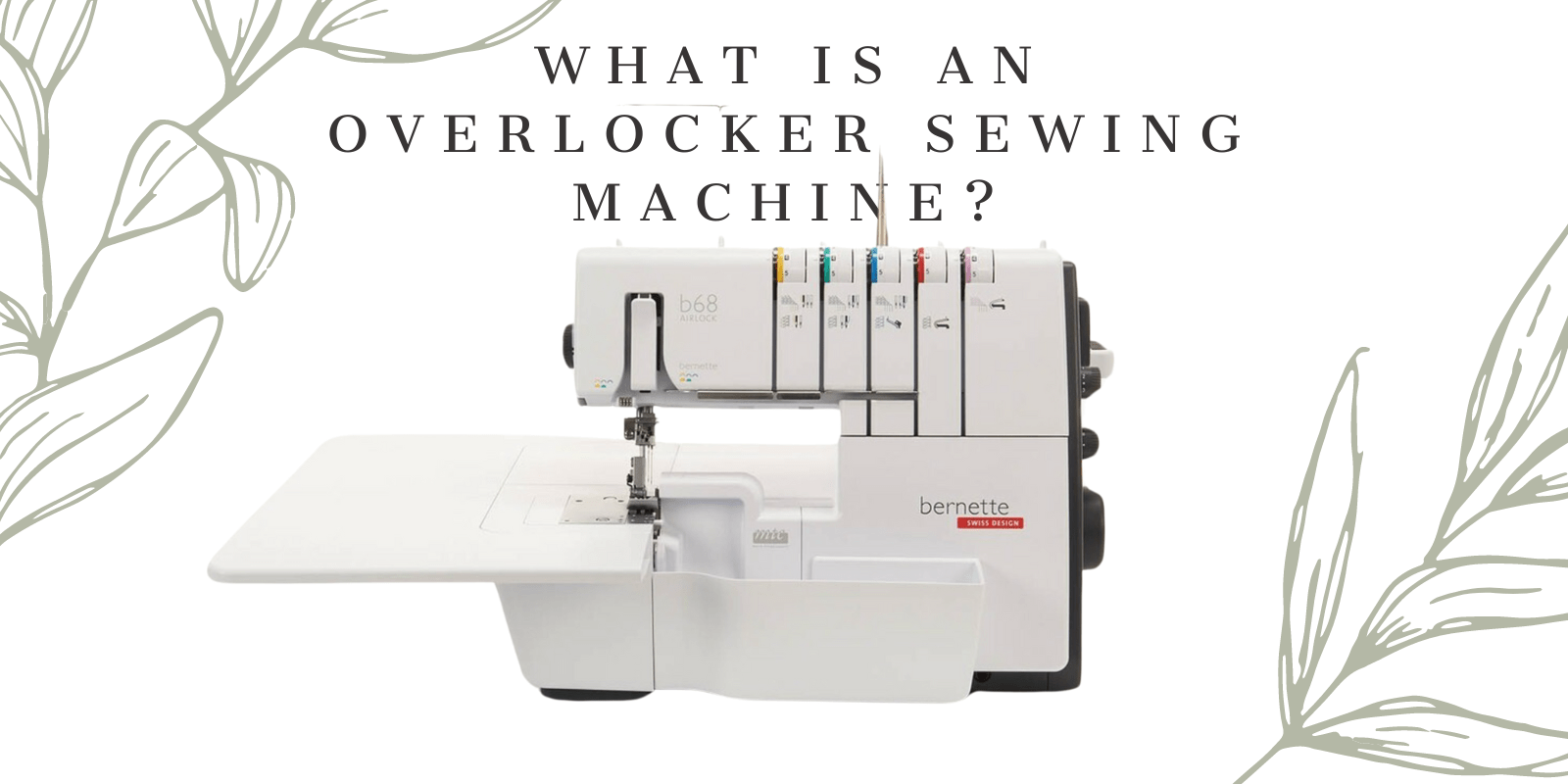
Basics of an Overlocker (Serger)
If you want clean, durable edges on garments, an overlocker (serger) is one of the most useful machines you can add after a regular sewing machine. It uses multiple threads, typically three, four, or five, to sew, trim, and finish a fabric edge in one pass.
So what is an overlocker? It is a specialized sewing machine that encases a raw edge with an overlock stitch while a built-in blade trims excess fabric. That combination creates a neat, flexible finish that resists fraying. In the US, the same machine is usually called a serger. Both terms refer to the same type of machine.
Threading an overlocker can feel intimidating at first, even for experienced sewists, because each thread has its own path and tension. Once the sequence becomes familiar, the machine is fast and practical for garment sewing, knits, and edge finishing. For easier entry-level options, see What Are The Best Overlockers For Beginners.
Overlocker (Serger) vs Sewing Machine vs Coverstitch
Do an overlocker and a sewing machine do the same job? Not really. They complement each other.
A regular sewing machine joins fabric with a wide range of stitches, works with a top thread and bobbin, and can sew both left and right of the needle depending on the stitch. It does not trim the edge for you. An overlocker (serger) focuses on edge finishing: it trims and wraps the cut edge with looper threads to create a strong, stretchy overlock seam or finish.
A coverstitch machine is different again. It is built mainly for hems and topstitching on knits, creating parallel rows of stitching on the right side with a looper thread underneath. Many sewists eventually use all three: a sewing machine for construction and details, an overlocker for seams and edge finishing, and a coverstitch for professional-looking knit hems. Combo overlock/coverstitch machines exist, but dedicated machines are often simpler to set up for each task.
Overlocker (serger) features:
- Sews and finishes an edge in one step.
- Works primarily to the left of the needles, along the fabric edge.
- Includes a blade that trims as you sew (usually disengageable).
- Uses multiple threads (commonly 3 to 5) for durable, stretchy overlock stitches.
- Helps prevent fraying and unraveling on cut edges.
- Has a compact free arm/working area suited to edge work at higher speeds.
Sewing machine functions:
- Handles a wide range of sewing tasks stitch by stitch.
- Can sew across a wider field, not only along an edge.
- Does not include a built-in cutting blade for edge finishing.
- Uses a top thread and bobbin for most stitches.
- Offers many stitch types, but straight seams on knits may need stretch stitches or finishes to stay flexible.
- Leaves raw edges unfinished unless you zigzag, overcast, bind, or serge them separately.
- Often has a longer free arm/harp space for larger projects, depending on the model.
The key distinction is that an overlocker (serger) trims and finishes edges with an overlock stitch, while a sewing machine offers broader stitch versatility without built-in edge trimming. Most sewists still need a regular sewing machine for buttonholes, zippers, topstitching details, and general construction.
Questions to answer before buying an Overlocker
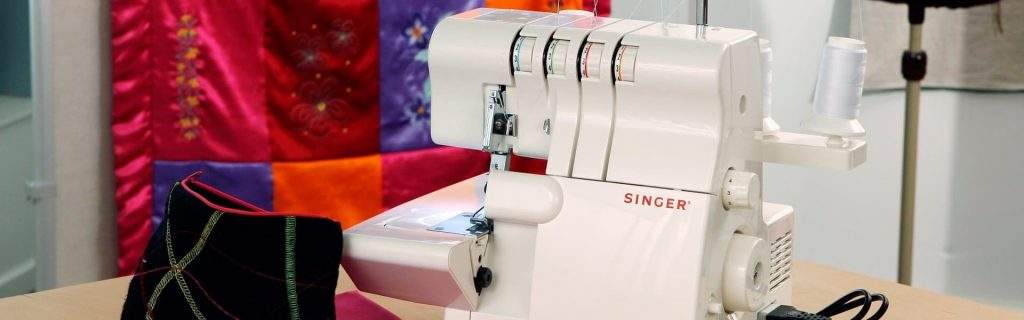
- Is the budget realistic? A dependable overlocker from a known brand usually costs more than the cheapest store-aisle options. Very low-priced machines can work for light use, but poor tension, weak blades, and frustrating threading are common tradeoffs. Plan for a machine you will actually want to keep threaded and use.
- Are you willing to learn threading and tension? Buying the machine is the easy part. Each thread is threaded individually, and each has its own tension control. Fabric changes can mean tension tweaks. Air-threading and automatic thread delivery systems reduce that hassle on some newer models, but every overlocker still has a learning curve.
- How confident are you with basic sewing? You do not need to be a professional, but you should be comfortable guiding fabric and checking stitch quality. Overlocker stitches are fast and hard to unpick, and the blade removes fabric as you sew. Practice on scraps, and leave a little seam allowance margin until you trust your cutting width.
Parts of an Overlocker
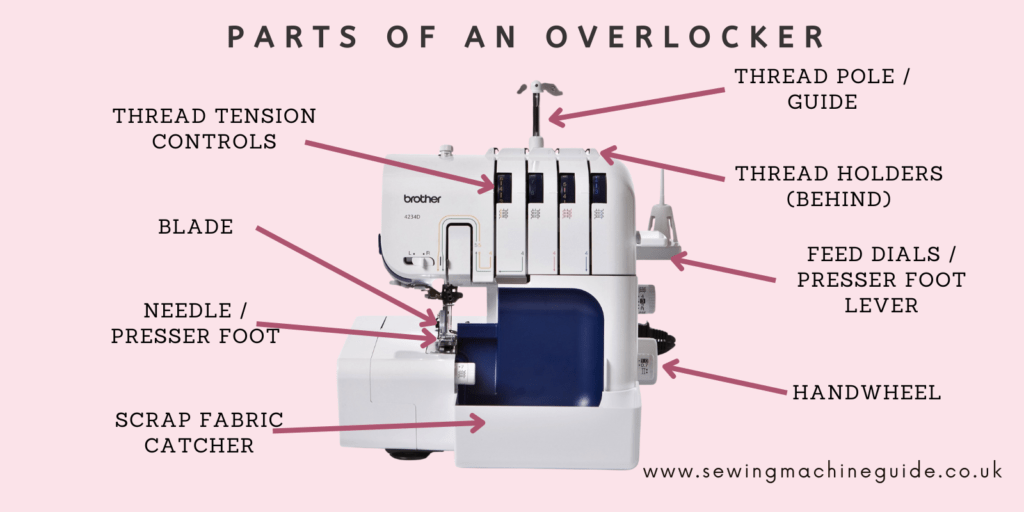
It helps to think of an overlocker as a small set of systems working together. At the top, a telescopic thread tree or guide pole keeps cones feeding smoothly. Threads sit on spool pins, then travel through tension dials or an automatic delivery system before reaching the needles and loopers.
A presser foot holds the fabric while you sew, usually with a lever to raise and lower it. A movable upper knife (blade) trims the edge as the stitch forms. Many machines also include or accept a scrap catcher or waste tray so trimmed fabric does not scatter across the table.
Below is a diagram that outlines the main parts of an overlocker.
Things to consider when buying an Overlocker
There are many overlockers on the market, and feature lists can look similar until you compare the details that affect daily use. Use the points below to narrow the field.
Threading difficulty
When you shop, pay close attention to how threading is taught and labeled. The lower looper is usually the hardest path. If a dealer will not let you try threading yourself, consider buying where support and demos are better. Color-coded paths, lay-in tensions, and air threading can make a real difference for beginners.
Built-in blade
The cutting blade is central to how an overlocker works. Look for a blade that cuts cleanly, can be disengaged when you want to sew without trimming, and is practical to maintain or replace. A machine without a usable cutting system is missing the main advantage of an overlocker.
Price
Price still matters, but “cheapest” is rarely the best goal. Buy the best build quality and threading ease your budget allows. You may not use every stitch at first, but features like differential feed, easy rolled hem, and stable tension become more valuable as your projects expand. A machine that frustrates you will sit unused, which makes even a low purchase price a poor value.
Built-in rolled hem
Most current overlockers can switch to a rolled hem with a lever or stitch finger adjustment. Models that require changing the needle plate and foot for every rolled hem are slower for everyday use and are better avoided if hems and fine edges are part of your sewing.
Positioning of Needles
Needle bar geometry varies by brand and model. Some sewists prefer machines with a more vertical needle path for thicker fabrics and fewer broken needles. Compare how the needles sit and how easy needle changes are when you demo machines side by side.
Differential feed
Differential feed is one of the most important overlocker features. Separate front and rear feed ratios help control stretch and prevent wavy seams on knits, or add ease/gathering when you want it. Ask for a demo on both stable woven fabric and a stretchy knit so you can see the difference.
Thread cutter
A well-placed thread cutter saves time at the end of a seam and keeps the work area tidier. It is a small convenience that you notice every time you sew.
Tension control
Tension is where many new overlocker owners get stuck. Stitch quality depends heavily on balanced needle and looper tensions. Higher-quality machines tend to hold settings more consistently. Some newer models offer automatic thread delivery systems that greatly reduce manual tension juggling. Even then, you still need to understand what a balanced stitch looks like so you can correct problems when fabric or thread changes.
Other features to look out for
- Smooth, steady running sound under normal sewing (harsh grinding is a warning sign).
- A free arm or narrow work area that helps with sleeves and small tubes, if that matches your projects.
- Speed control via foot pedal, so you can sew slowly while learning and faster once confident.
- Adjustable stitch width and length.
- A seam guide, built-in or removable, so cutting and stitching stay consistent.
- Covers and doors that open easily for cleaning and threading access.
- Useful accessories such as tweezers, screwdrivers, spool caps, dust cover, and spool nets.
- Secure needle clamps/screws for each needle so needles stay put during changes.
- Removable stitch fingers for different widths, including rolled hem setups.
Conclusion
An overlocker (serger) is not a full replacement for a sewing machine, and it is not the same as a coverstitch machine. It is the specialist tool for fast, durable edge finishing and stretch-friendly seams. If you decide to buy one, ask the dealer to demonstrate threading, differential feed, rolled hem conversion, and blade disengagement before you commit. For model recommendations, see What Are The Best Overlockers. If you want an easier first machine, start with our Best Overlockers For Beginners guide.