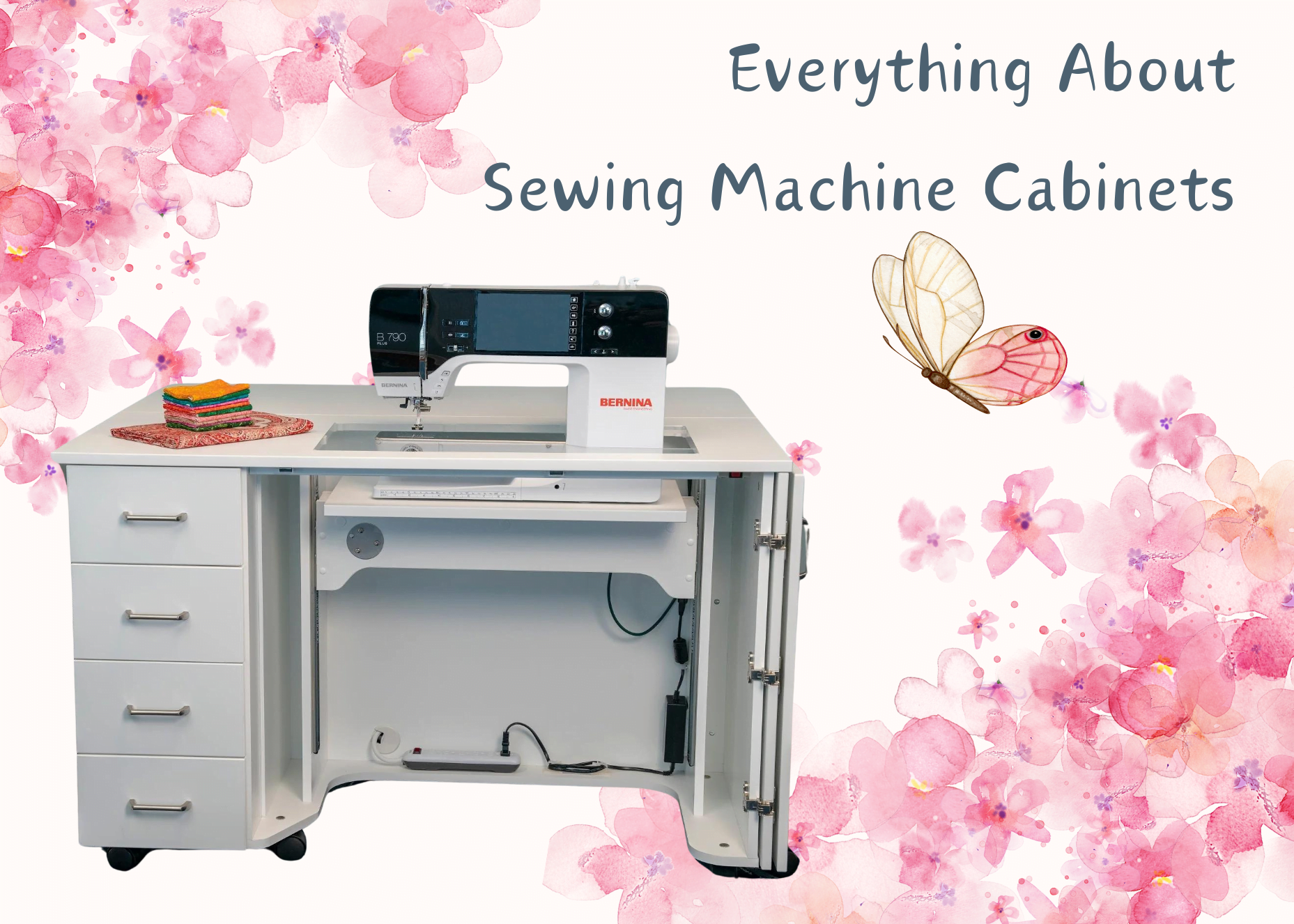
A sewing cabinet gives you a dedicated place for your machine and a clearer way to store thread, tools, and notions. With a good cabinet, supplies stay closer to hand, the machine has a stable surface, and your sewing room looks less cluttered. Closed cabinets also help keep dust off the machine when you are not sewing.
For specific product picks, see: Best Sewing Cabinets.
What is a Sewing Machine Cabinet
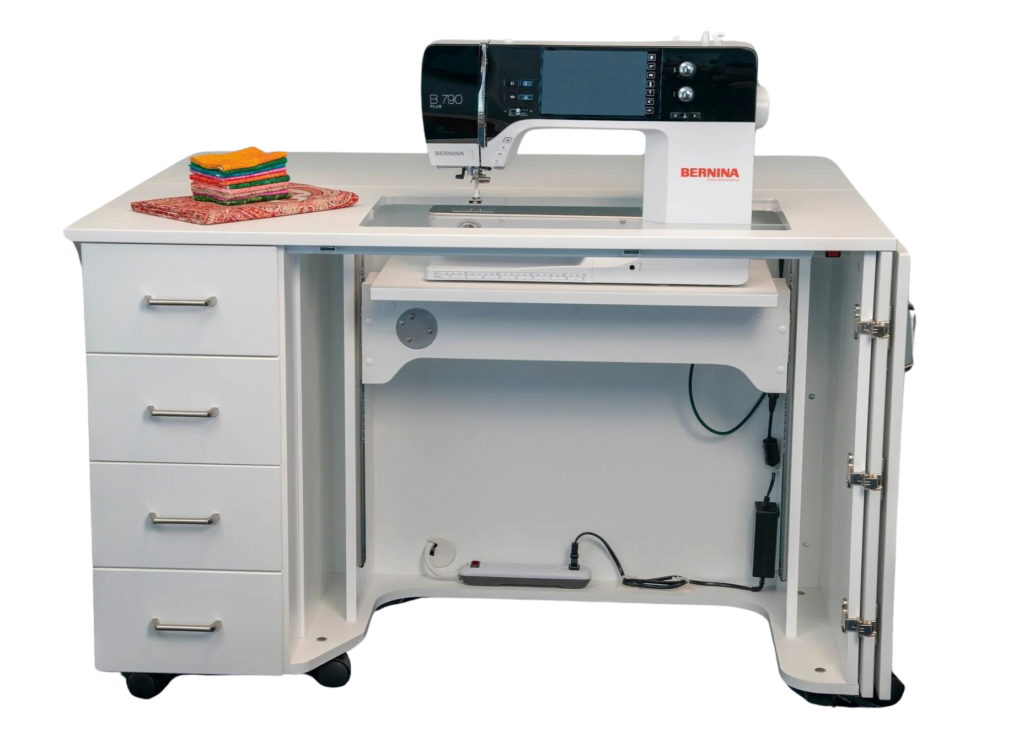
A sewing cabinet is furniture built around sewing work, not just a desk with drawers. Most include a flat top or machine well for the sewing machine, plus drawers or compartments for thread, fabric, patterns, and notions. Some add shelves, doors, or side leaves for extra surface when projects get larger.
What types of sewing cabinets are there
Cabinet styles vary more than many first-time buyers expect. The best choice depends on room size, whether you leave the machine set up, and how much storage you need. Common types include:
- Portable or compact sewing cabinets: lighter units that move more easily and suit temporary setups or small rooms. They usually offer less surface and storage than full cabinets.
- Drop-leaf sewing cabinets: hinged leaves fold out for a larger work area, then fold away when you need floor space or a smaller footprint.
- Lift-top or hydraulic-lift cabinets: the machine sits on a lift that moves between free-arm, flatbed, and storage positions. These are popular when you want ergonomic sewing height and the option to close the machine away.
- Wall-mounted sewing cabinets: mounted to the wall to free floor space. Useful in tight rooms, but installation and wall strength matter, and they are less common than freestanding models.
- Sewing armoires: larger freestanding cabinets that store a machine and accessories behind doors. Many include multiple drawers; some add lighting. They take more floor space but hide gear well between sewing days.
Do you need a sewing cabinet for your sewing machine
No. Plenty of sewists work happily on a sturdy sewing table, adjustable desk, or even a reinforced craft table. A cabinet becomes worthwhile when you want better organization, dust protection, a machine lift, or a furniture look that closes up in a shared room. If you sew rarely and store the machine in a closet, a simpler table may be enough.
How does a sewing cabinet work
In use, the cabinet is your sewing station: the machine sits on the top or in a recessed well, and drawers or shelves hold the supplies you reach for most. Some models include extras such as built-in lighting. When you finish, you store notions in the compartments and, on lift models, lower the machine into the cabinet and close the leaves or doors. That closed position protects the machine from dust and clears the surface for other uses.
Are sewing cabinets universal
No. Cabinets are built around ranges of machine size, weight, and sometimes footprint, not one universal fit. Features and storage layouts also differ widely. Before you buy, measure your machine and compare those numbers to the cabinet’s listed well size, weight limit, and closed dimensions. If you expect to change machines later, look for models with adjustable platforms, inserts, or published compatibility ranges.
Can any sewing machine fit in a sewing cabinet
Not every machine will fit every cabinet. Large embroidery units, heavy industrial machines, and some wide free-arm models can exceed the well size or weight rating. Measure width, depth, height, and weight, then check the cabinet specs carefully. Cabinets with adjustable shelves, interchangeable inserts, or hydraulic lifts often handle a wider range of domestic machines, but they still have limits.
How high should a sewing cabinet be
Working height depends on your height, your chair, and whether the machine sits on top or drops into a well. The goal is a setup where you can sew with your feet flat, shoulders relaxed, and forearms roughly level with the work surface. Many sitting sewing cabinets land near standard desk or dining height, often around 29 to 30 inches, but that is a starting point rather than a rule. Some cabinets run a bit higher or lower by design. If possible, sit at a similar setup in person, or compare cabinet height with your preferred chair height before you buy.
What is an air lift on a sewing cabinet
An air lift (often a hydraulic or pneumatic lift) raises and lowers the sewing machine in the cabinet well. That makes it easier to move between free-arm sewing, flatbed sewing, and storage without lifting a heavy machine by hand. It reduces strain on your back and shoulders and helps protect the machine from bumps during setup. Some cabinets include the lift; others may need a compatible lift purchased separately. Follow the manufacturer’s weight limits closely, since overloading a lift is a common problem.
What sizes does a sewing machine cabinet come in
Cabinets come in a wide range of footprints. Exact numbers vary by brand, but these rough size groups help with shopping:
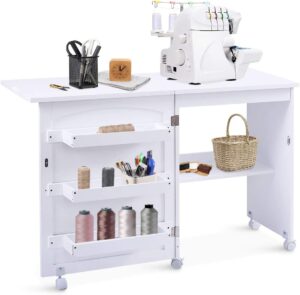
- Compact sewing cabinets: smaller, more portable units for tight spaces. Footprints often land near 36 inches wide by 18 inches deep, with height commonly around 30 inches or less.
- Mid-size sewing cabinets: more work surface and storage while still manageable in many spare rooms. Footprints often land near 48 inches wide by 24 inches deep, with height commonly around 36 inches or less.
- Full-size sewing cabinets: larger freestanding stations with more storage and space for bigger machines or quilt leaves. Footprints often land near 60 inches wide by 30 inches deep, and some are taller or expand much wider when leaves are open.
Treat those sizes as examples only. Always measure your machine and your room doorway clearance, then confirm open and closed dimensions for the exact model.
How to get a sewing machine out of a cabinet
Start with the cabinet on a solid, level surface and lock any casters. Open the doors or leaves and clear drawers or shelves that block the machine. If the machine sits on a shelf or in a well without a lift, support it from underneath and lift straight up rather than dragging it over the edge.
If the cabinet has an air lift, use the release button or lever as directed in the manual to raise the machine into the sewing position before you remove it. Machines can be awkward and heavy, so ask for help with larger models. Once the machine is free, set it on a sturdy table, plug it in, and check that the needle and presser foot clear the surface before sewing.
If the lift sticks or the removal steps are unclear, use the cabinet and machine manuals, or contact the manufacturer. Forcing a jammed lift can damage both the cabinet and the machine.
Where to buy a sewing machine cabinet
You can find sewing cabinets at sewing and fabric retailers, some furniture stores, and major online marketplaces. Popular places to start include:
- Fabric and craft retailers such as Joann, where staff can sometimes help match cabinet size to your machine. Selection varies by location and season.
- Furniture retailers, including larger home-office lines at stores like IKEA or Ashley Furniture. These may be general craft or desk pieces rather than true sewing cabinets, so check for a machine well, lift, and weight capacity.
- Online retailers such as Amazon, specialty sewing furniture sites, and marketplaces like eBay or Etsy. Online shopping makes it easier to compare specs and reviews, but you should still verify shipping, assembly needs, and return policies for large furniture.
Compare features and shipping costs before you buy. Local sewing or quilting groups can also point you toward dealers who stock cabinets you can sit at in person.
What is the best sewing cabinet?
There is no single best cabinet for every sewist. The right model depends on your machine, storage needs, and room. A few well-known styles people often compare include:
- Arrow Gidget II Sewing Cabinet: a compact option with a drop-leaf top for a larger work area in smaller rooms. Features can include a removable shelf and integrated lighting on some versions, so check the current model details.
- Koala Studios Sewing Cabinet: roomier cabinets designed for many domestic machines, often with an air lift and substantial drawer storage. These suit sewists who want a more permanent furniture station.
- Sullivans Home Hobby Table: a versatile craft and sewing table style with a fold-down top, storage drawers, and often a built-in power strip. Handy for mixed craft rooms where sewing is one of several uses.
For more recommendations and buying links, see: Best Sewing Cabinets.
Before you decide, compare well size, weight capacity, open footprint, storage layout, and price. Read recent owner reviews for assembly notes and long-term durability, and prioritize machine fit over looks. A handsome cabinet that does not support your machine safely is the wrong buy.