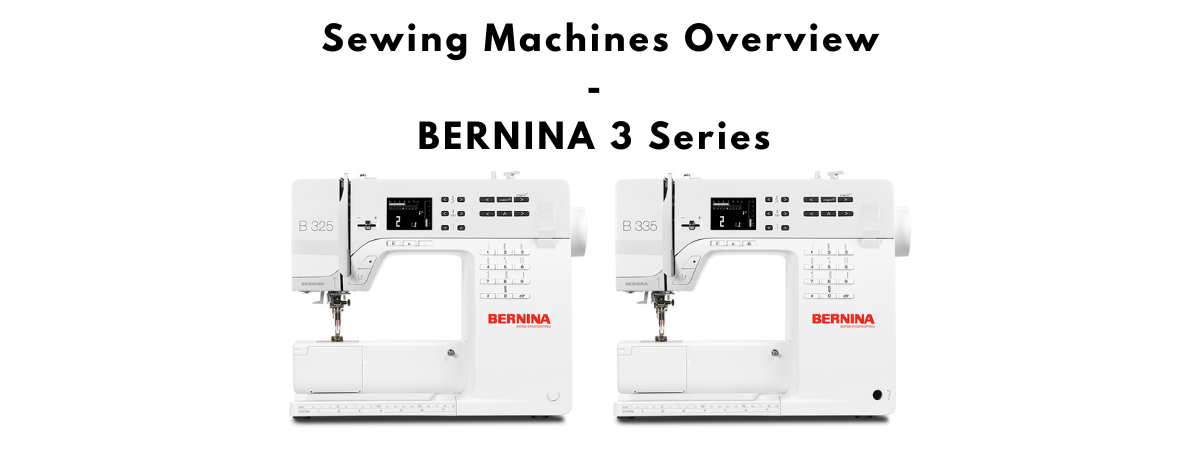
Bernina has built sewing machines in Switzerland since Karl Friedrich Gegauf founded the company in 1893. The Series 3 sits at the more compact, approachable end of the current lineup: computerized machines with Bernina’s hook system, but without the larger throat space and higher stitch counts of the 4 Series and above. Official details are on bernina.com. This overview covers the Bernina 325 and 335, what they share, and where they diverge. If you are also looking higher in the range, see our Bernina 4 Series comparison of the B435, 475 QE, and 480.
Bernina Series 3 sewing machines
Series 3 currently centers on two models: the Bernina 325 and Bernina 335. Both are compact computerized machines aimed at home sewing, garment work, and lighter craft projects. They are a step up from basic mechanical machines, but they are not large quilting platforms. Soft U.S. pricing for this class often lands from roughly the low $1,000s upward, depending on dealer and package.
Bernina 325
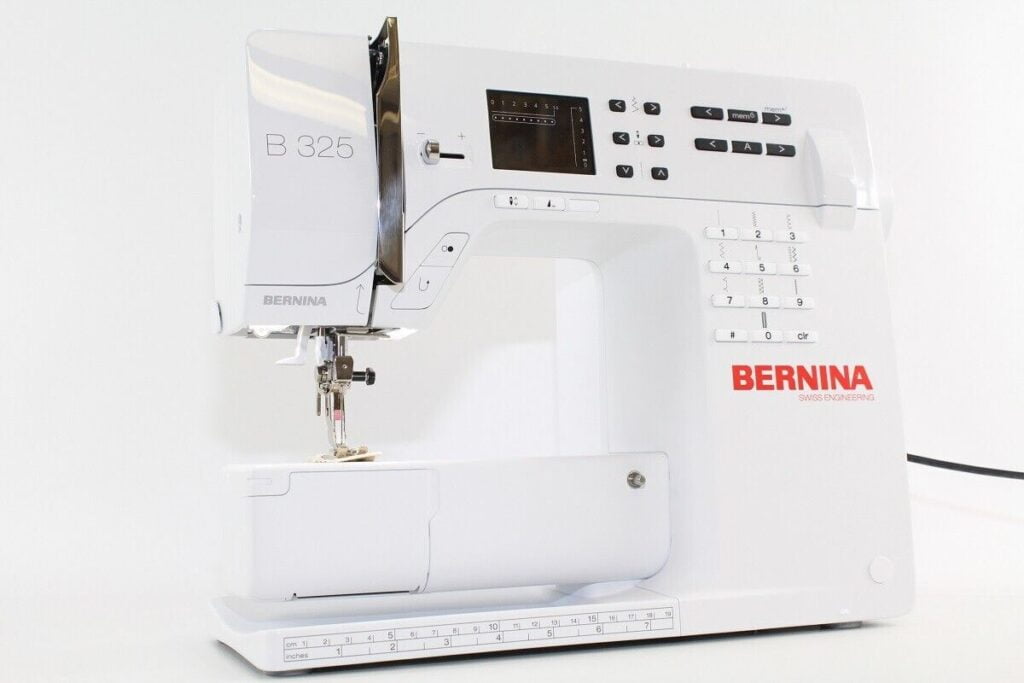
The Bernina 325 is the simpler Series 3 option. Top speed is about 900 stitches per minute, with a maximum stitch width of 5.5 mm (about 7/32 in) and stitch length up to 5 mm (about 3/16 in). You get an LCD, 8 LEDs for sewing light, and 9 needle positions. Total stitch patterns are 97, including 15 utility, 23 decorative, and 3 cross-stitch styles. Setup stays straightforward: semi-automatic needle threader, manual thread cutter, and reverse. That combination suits newer sewists and anyone who wants Bernina build quality without paying for a larger stitch library.

Bernina 335
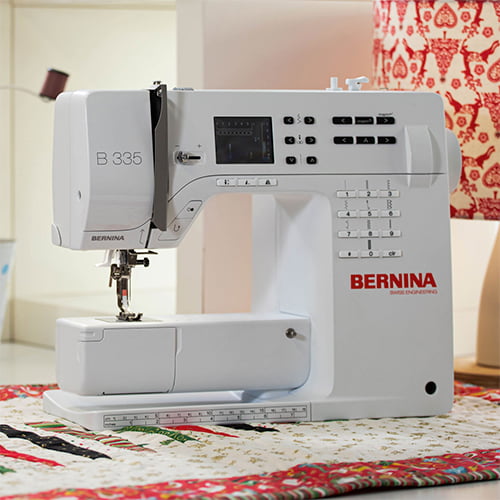
The Bernina 335 keeps the same compact footprint and the same 900 spm / 5.5 mm width / 5 mm length limits, but expands what you can sew. It includes an LCD, 8 LEDs, and 9 needle positions, with 221 stitch patterns (20 utility, 91 decorative, and 4 cross-stitch). Extra control comes from the Bernina Free Hand System (FHS) knee lever for raising the presser foot hands-free, plus mirror imaging for decorative work. Like the 325, it has a semi-automatic needle threader, manual thread cutter, and reverse. The smaller body still helps if space or portability matters, but you are paying for more stitches and those convenience extras.

Key differences
The practical gap is stitch count and a few accessories. The 335 has 221 patterns versus 97 on the 325, plus FHS and mirror image. It also typically includes Open embroidery foot #20 and a dust cover, which are not part of the 325 package. Speed, stitch width, lighting, and needle positions stay the same, so the 325 is not a weaker sewist for basic seams. You step up mainly for decorative variety and hands-free presser foot control.
Conclusion
Choose the 325 if you want a compact Bernina for everyday sewing and do not need a large decorative library. Choose the 335 if you will use more stitch patterns, FHS, and mirror imaging often enough to justify the higher price. Neither replaces a wide-throat quilting machine, but both are sensible entry points into Bernina for home sewing. Soft U.S. pricing varies by dealer; expect Series 3 to sit below the 4 Series models discussed in our linked comparison.