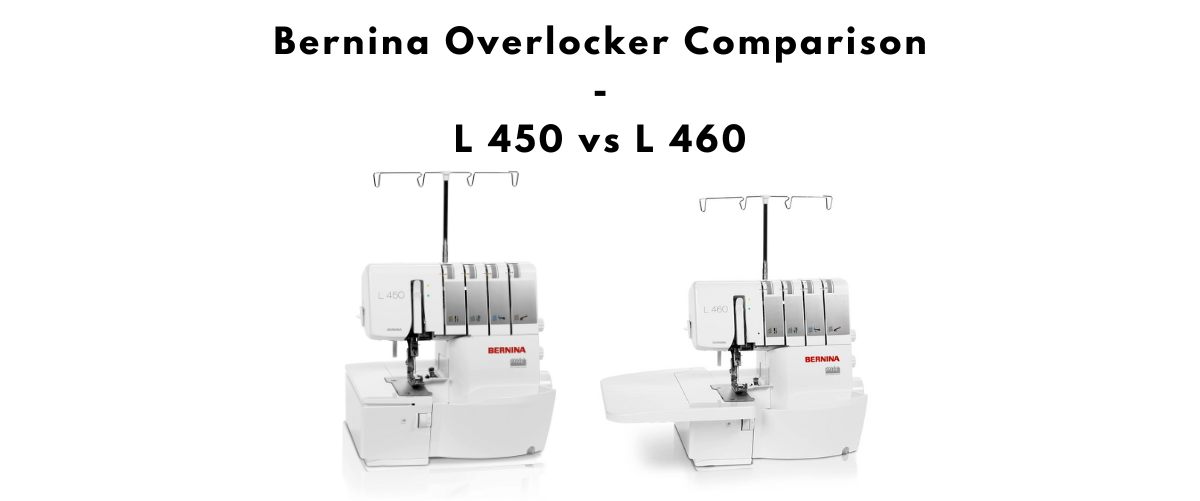
The Bernina L 450 and Bernina L 460 are closely related overlockers from Bernina (see also bernina.com). They share the same stitch family and many core finishing tools, but the L 460 adds speed, motor type, and comfort extras that matter if you serge often. Here is how those differences show up in real sewing.


Overview: Bernina L 450 and L 460 Overlockers
Both machines sit in Bernina’s premium overlocker lineup and are built for clean edge finishes across knits and wovens. If you already know you want Bernina stitch quality and Micro Thread Control, the decision is less about “can it overlock?” and more about whether the L 460’s extras justify the higher price.
Stitch Variations
Both the L 450 and L 460 offer 16 stitch variations, including 4-thread overlock, 3-thread super-stretch, 3-thread flatlock (wide/narrow), and 2-thread overlock (wide/narrow), among others. That covers garment seams, stretch construction, rolled edges, and decorative flatlock work without needing a second serger for most home sewing.
Comfort and Ease-of-Use Features
Both machines include a manual needle threader, lower looper threader, color-coded threading path, lay-in threading system, and handwheel position indicator. Those details shorten threading time and reduce the “where does this thread go?” guessing that slows beginners down on an overlocker.
Unique to the L 460 are automatic needle stop up and a safety switch that engages when the cover is open or the presser foot is raised. Needle stop up helps when you are repositioning fabric at a seam join. The safety switch is a practical stop for busy sewing rooms where lids get opened mid-session.
Technical Specifications Compared
Shared specs include Micro Thread Control (mtc), 3-9 mm overlock seam width, upper knife drive from below, a 2-step presser foot lift with additional front foot lift, and 5-step presser foot pressure. MTC and adjustable pressure matter when you move between fine jersey and heavier wovens and need the looper threads to sit flat instead of tunnelling or flaring.
The clearest technical split is motor and speed. The L 450 uses an AC motor and sews up to 1,200 stitches per minute. The L 460 uses a DC motor and reaches 1,500 stitches per minute. If you finish long seams regularly, that speed gap adds up; for occasional serging, the L 450’s rate is usually enough.
Standard Accessories Included
Both models include standard overlocker accessories such as the standard overlock presser foot, upper looper converter, cut-offs bin, and a set of needles. The L 460 also includes the Bernina Free Hand System (FHS) knee lifter and a slide-on table as standard. The knee lifter keeps both hands on the fabric when you raise the foot, and the table supports larger pieces that otherwise hang and pull the seam off line.

Extra Functions
Both models include differential feed adjustment, a thread cutter, and stitch width adjustment. Differential feed is the control that keeps knits from wavy hems and stops lightweight fabrics from stretching as they feed. Width adjustment helps match seam allowances and rolled-hem setups without fighting a fixed knife position.
Summary
Both the Bernina L 450 and L 460 are strong long-term overlockers. The L 450 is the better value if you want Bernina stitch quality and reliability without paying for comfort extras you may not use. It still covers precise seams, rolled hems, and general overlocking.
The L 460 is the better choice for frequent sewists who want more speed and convenience. The faster DC motor, automatic needle stop up, Free Hand System, and included slide-on table make longer sessions easier, especially on larger garments.
In short:
- Choose the L 450 if you want a high-quality, dependable overlocker at the best value (see our L 450 review).
- Choose the L 460 if you want extra speed, convenience, and comfort features for more demanding or higher-volume sewing (see our L 460 review).
Check current pricing in the product boxes above. Street prices and included accessories can vary by retailer and region.
Comparison Points to Recheck Before You Buy
Before you decide, compare stitch options (same on both), motor type and speed, comfort features such as needle stop and safety switch, and whether the Free Hand System and slide-on table are included or optional on the package you are offered.