Looking for a small, easy-to-use sewing machine? Mini sewing machines are a low-cost way to try basic sewing without a large footprint. They are compact, lightweight, and approachable for quick repairs, crafts, and learning simple stitches. This guide covers what mini machines can realistically do, what to check before you buy, and several popular models. Whether you are a beginner, shopping for a child, or need a portable backup, use this as a practical filter rather than a promise that a mini can replace a full-size machine.
Why Choose a Mini Sewing Machine?
A mini sewing machine makes sense if you want to explore sewing without the cost or bulk of a standard model. These machines store in a cupboard or tote and can handle light work such as hemming, craft panels, and simple clothing repairs.
They are popular with beginners, students, and casual users because setup is usually quick and less intimidating than a full-featured machine. Minis also work as travel or backup tools when your main machine is unavailable. The tradeoff is durability and fabric range: they are built for light duty, not denim stacks or frequent garment construction.
Things to Consider Before Buying a Mini Sewing Machine
Before you buy, be clear about what these compact models can and cannot do:
1. Purpose and usage – Mini machines suit small projects, simple stitching, and repairs. They are a poor fit for heavy fabrics like denim or upholstery.
2. Stitch options – Many offer around 8 to 12 built-in stitches. That is enough for beginners, but limited for advanced work.
3. Power source – Dual power (mains adapter and batteries) is useful for travel or quick fixes away from an outlet.
4. Build quality – Lightweight usually means more plastic. Read recent reviews for skipped stitches, breakage, and parts support.
5. Features – Reverse stitch, free arm, extension table, and a work light make a real difference in daily use.
6. Price and warranty – Expect a modest spend for a decent mini (often in a low budget range; check current price on the product listing). Confirm warranty terms before you buy.
Mini machines are a fun, affordable entry point. If you already know you will sew larger or thicker projects, start with a compact full-size beginner machine instead.
Best Mini Sewing Machine Reviews
1) KPCB Tech Sewing Machine with Extension Table
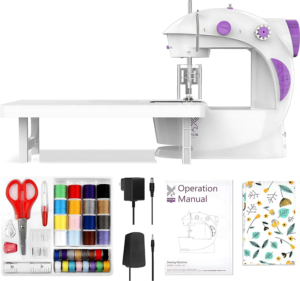
The KPCB mini sewing machine is a popular budget option with generally positive buyer feedback. Its main advantage over many bare-bones minis is a larger extension table, which gives more support for bigger pieces of fabric and a more stable work surface. A cuff/sleeve opening also helps with tubular sewing.
You typically get two speed settings and dual power options, as with many machines in this class. Stitch variety is limited compared with fuller mini models, and there is no reverse stitch on this one. That makes it better for simple seams than for reinforced sewing. Even so, stitch quality can surprise people for the price, and it handles a useful range of light to medium fabrics within mini-machine limits.


2) Sew Mighty Mini Sewing Machine
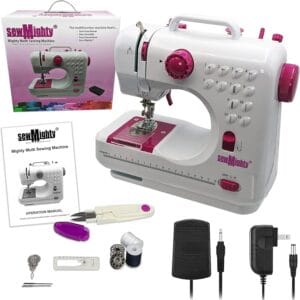
The Sew Mighty Mini (also sold under names such as Mighty Multi, depending on the listing) is a compact beginner model with more stitch variety than many minis. It typically offers 12 pre-programmed stitch patterns, including straight, zigzag, and a four-step buttonhole, which is uncommon in this size category.
Dual power is a strong point: standard AC power or four AA batteries. A two-speed reversible motor helps you control pace, and forward/reverse stitching helps secure seams. Extra features often include an automatic bobbin winder, free arm, LED work light, and thread tension control.
You can usually run it with a foot pedal or a hand switch, which is useful for kids or casual users who want simple controls. Weight is typically just under 2 kg (about 4.4 lb), so it packs easily. Kits often include extra needles, pre-wound bobbins, a buttonhole foot, thread snips, and a tape measure. Confirm the current bundle on the product page, as accessory packs can vary by seller.

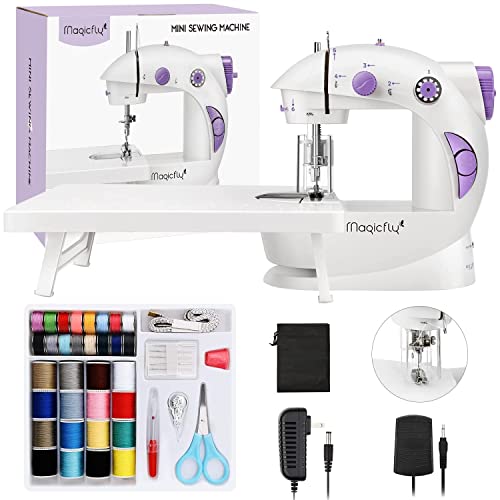
3) Mini Sewing Machine from Magicfly Mini
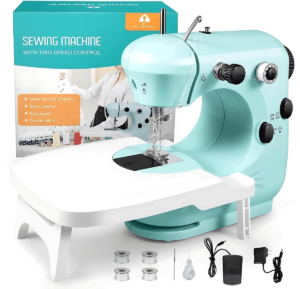
This Magicfly mini is very lightweight at about 1.2 kg (roughly 2.6 lb), which makes it one of the easier options to carry. A large extension table, built-in sewing light, and deep U-shaped free-arm area help with pants, sleeves, and larger fabric pieces compared with tiny no-table minis.
With two-thread sewing and correct tension adjustment, it can produce firm, usable stitches for light projects. A built-in winding pole and spool assist help rewind bobbins when the machine is running. Like other minis, it remains best for light fabrics and short sessions rather than heavy or frequent sewing.
4) The 12 Stitch Multi-Function Sewing Machine
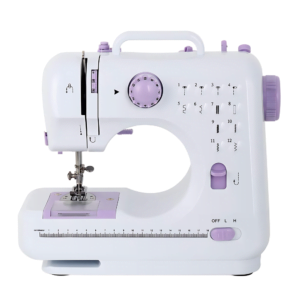
The 12-stitch multi-function mini from WENMILY is one of the better-known feature-packed options in this price band. High and low speed settings help with control, and double-thread stitching can produce neat, firm seams when tension is set correctly.
Twelve built-in stitches cover many small household tasks. Useful extras include free-arm sewing for cuffs and pant hems, an overlock-style stitch option on many listings, and reverse sewing to reinforce seams. Dual power (mains or 4 AA batteries) keeps it portable.
It is still a mini machine, so expect plastic construction and limited thick-fabric performance. For light repairs and craft sewing, the feature set is one of the stronger values in this group. Check current price and included accessories in the product box.

Are mini sewing machines good for kids?
If kids are serious about learning to sew, a compact full-size mechanical sewing machine is usually a better first machine than a mini. Minis can seem kid-friendly, but they often frustrate beginners with skipped stitches, tangling, and frequent unthreading. That turns a fun hobby into a chore. For better starter options, see Best Sewing Machines For Kids.
Are mini sewing machines worth it?
They can be worth it for very basic sewing, travel, or occasional repairs when budget and space are tight. They are not as durable as regular sewing machines and struggle with many thicker fabrics. Cheap construction also means more skipped stitches and threading issues on some units. If you expect regular garment sewing, start with a basic full-size machine instead: Best Sewing Machine For Beginners.
Final Words
Mini sewing machines have clear limits, but they still earn a place as portable, affordable tools for light work. Dual power options and small size make them easy to use almost anywhere. Just buy with realistic expectations: great for hems and crafts, not for heavy fabrics or frequent garment construction. The models above are among the better value options in this category when you want convenience over capability.
Hi can you recommend any books, pdf documents and online tutorials to learn how to use the model with purple buttons (and the others) on your website please?