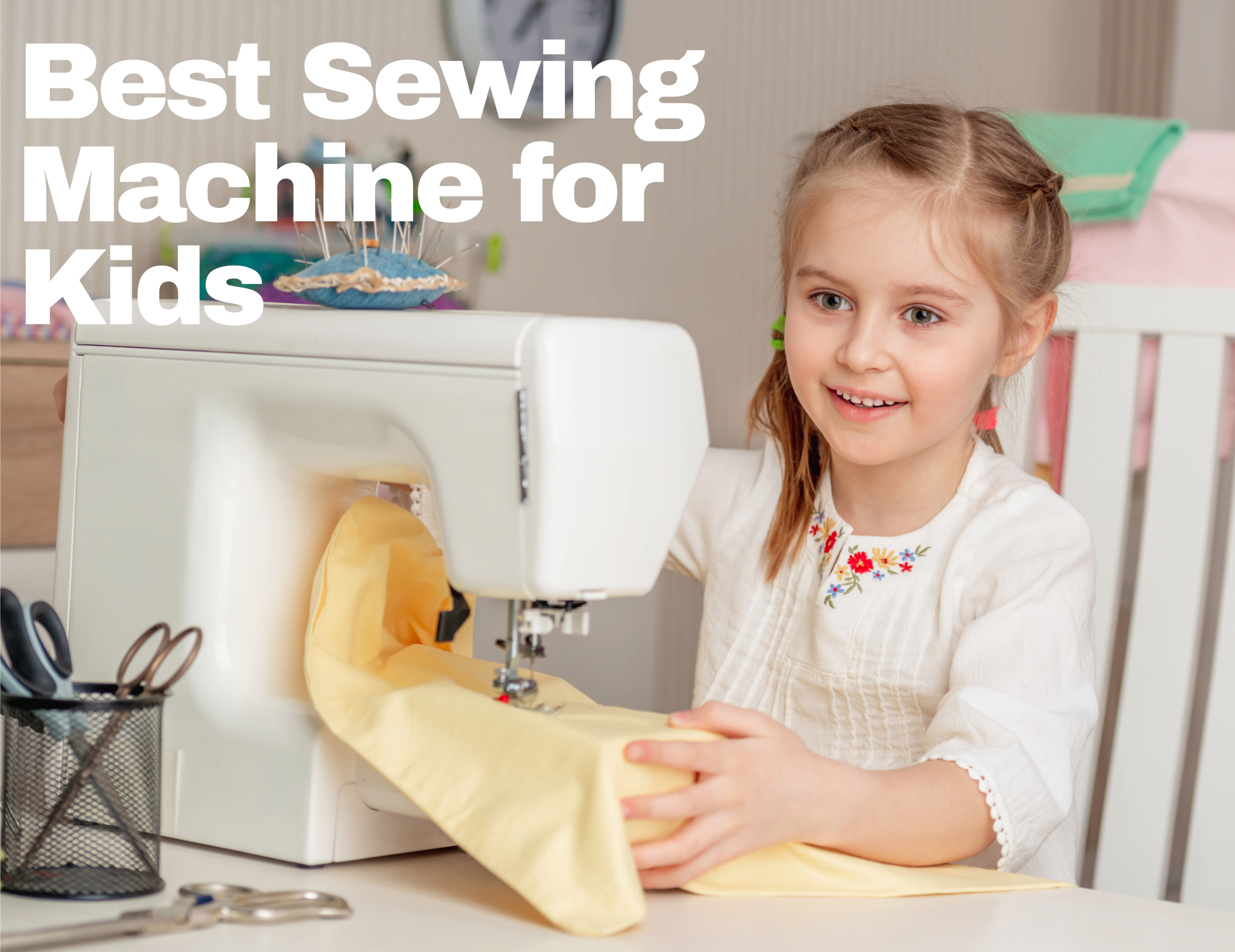
If your child is curious about sewing, the right first machine can make learning feel safe, doable, and fun. A well-chosen beginner sewing machine helps kids build confidence stitch by stitch, whether they are moving up from a toy model or starting from scratch. This guide covers age guidance, safety basics, and the features that matter most, then shares our top picks for 2026.
Sewing interest among younger makers has grown, and many brands now sell machines aimed at kids or absolute beginners. That wider choice helps, but it can also make shopping slower. Use the buying advice and reviews below to match a machine to your child’s age, attention span, and how quickly they are likely to outgrow the basics.
Best Sewing Machine For Kids


At What Age Can Children Start Sewing?
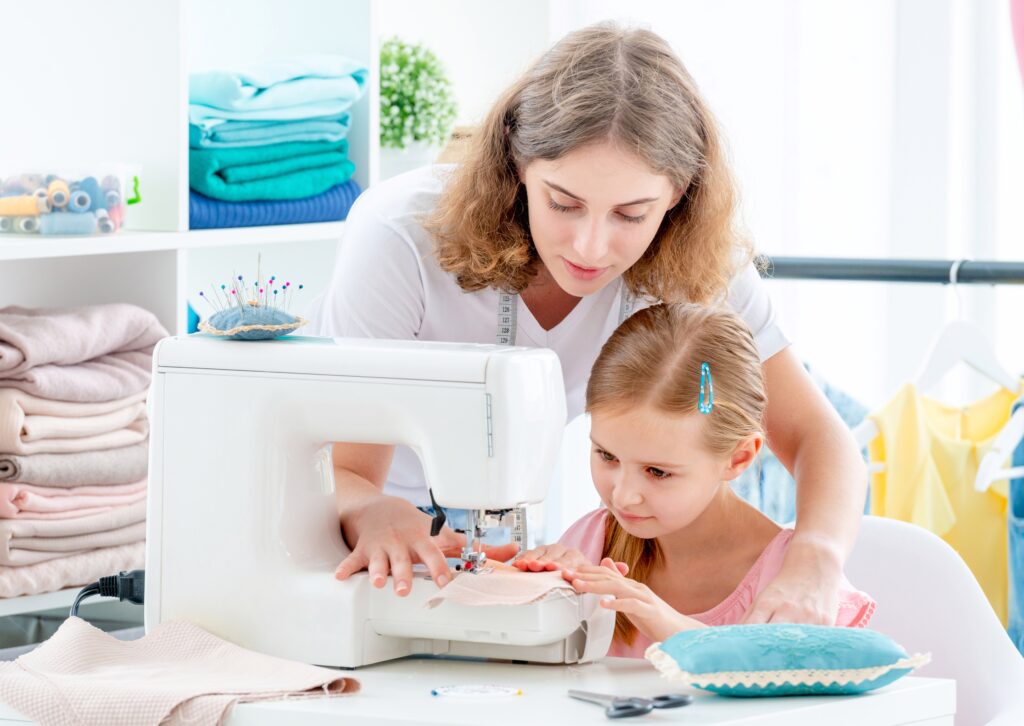
There is no single “right” age. It depends on the child, their focus, and how closely an adult can supervise.
Some children begin as early as four with close supervision and a very simple machine. At that age, short attention spans are common, so keep sessions brief and expectations light.
From about age seven upward, many kids can follow simple steps more consistently and enjoy sewing as a real hobby rather than a one-off activity.
Benefits Of Sewing For Kids
Sewing gives kids a creative outlet that is also practical. Making doll clothes, pouches, or simple gifts lets them see an idea become something real, and that progress is motivating.
It is also a useful life skill. Being able to sew on a button or mend a seam saves clothes that would otherwise get thrown away.
For some children, sewing is a welcome screen-free activity. It will not appeal to every child, but if yours shows interest, encouraging that curiosity is usually worth it.
Choosing The Best Sewing Machine For Kids
What Type Of Sewing Machine Is Best For Kids
For a first machine, keep things simple. A mechanical model or a very basic computerized machine is usually the better fit. Advanced computerized machines can overwhelm a child before they have learned tension, fabric feeding, and straight seams.
Some entry-level computerized machines do help with guidance. An LCD screen that suggests the right presser foot for a stitch can reduce guesswork while a child is learning.
Kids who are comfortable with tech may enjoy a computerized machine, but those models usually cost more and are not automatically the best choice. Most of the picks below are mechanical because they are easier to understand. Computerized options are still worth considering if your child is ready for them and the budget allows.
Ease Of Use
If a machine feels too complicated, interest fades quickly. Match the controls to your child’s current ability first, then worry about upgrade features.
One early decision is foot pedal versus start/stop button with a speed slider. A traditional foot pedal asks a child to manage speed with one foot while guiding fabric with both hands. That coordination takes practice and can frustrate younger beginners.
Machines with a start/stop button and speed slider make it easier to slow everything down. That helps a child focus on keeping a straight line, turning corners, and feeding fabric evenly. The tradeoff is price: those controls usually cost more than pedal-only entry machines.
Useful features to look for on a kids sewing machine include:
- Automatic needle threader
- Jam-resistant bobbin
- Stop/Start button
- Sliding speed control
- Automatic thread tension
Safety Features
Safety comes first. Choose features that reduce risk, and stay nearby until your child has safe habits.
Finger guards are especially useful because children’s fingers are smaller and can get closer to the needle area. Not every machine includes them. Some kids-focused models do, and separate finger guards can often be added if your machine does not come with one. Always supervise young sewists, even with guards in place.
Variable speed control is another practical safety aid. Slower stitching gives a child more time to react and keeps tricky sections under control.
Stitches
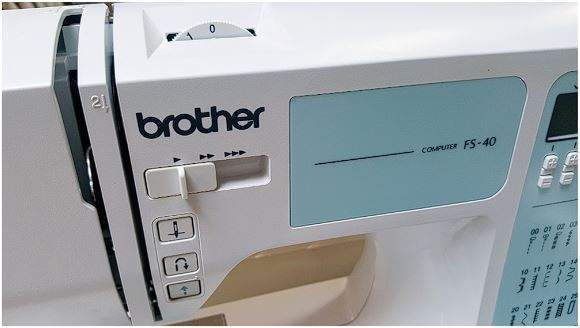
Too many stitches can confuse a new learner. A basic machine with around a dozen stitches is usually enough while a child masters straight seams, simple shapes, and finishing basics.
Price
Budget often decides the shortlist. Price depends on build quality, included features, and whether the machine is a toy-style starter or a real beginner sewing machine. Check current prices in the product boxes, since deals change often.
Top 5 Best Sewing Machines For Kids
Cool Maker Sew Cool Sew n’ Style Machine
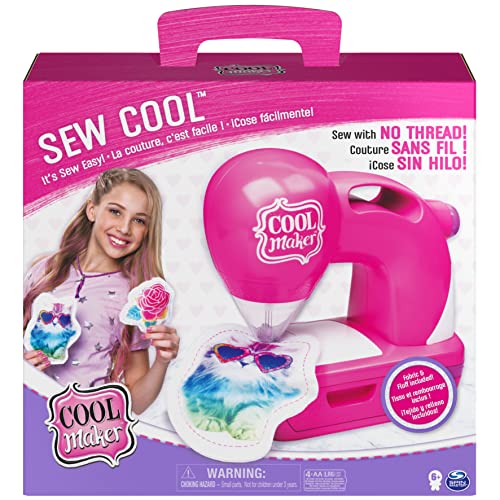
The Cool Maker Sew n’ Style is aimed at the youngest beginners, roughly ages 5 to 7. It is the most basic option on this list, and the price usually reflects that. If your child has never used a sewing machine, this can be a low-pressure way to try the hobby.
Finger guards are included, which matters at this age. The design is meant to keep early use simple and safer under supervision.
Instead of standard sewing thread, it uses a thin wool-style thread that is easier for small hands to manage. Included starter projects (such as a plush unicorn and glitter pouch) help kids finish something quickly, and a pom-pom attachment adds a playful customization option.
Treat it as an introduction, not a long-term machine. If sewing sticks, plan to move up to a real beginner model before long.
The Great British Sewing Bee Kids Beginner Sewing Machine
The Great British Sewing Bee kids beginner machine is designed for ages 6 and up and comes with enough accessories to start sewing right away. It is a step up from pure toy machines while still staying approachable.
The layout is simple: mains powered, two speed settings, foot pedal control, and upper and lower thread. That combination feels closer to a real sewing workflow without burying a child in settings.
Adjustable stitch length, sewing speed, and a backstitch function give useful control for early projects.
Typical packages include scissors, a tape measure, metal bobbins, spare needles, thread reels, and assorted fabrics. Project kits (tote bags, skirts, pillows, blankets, and similar) are also available separately, which helps keep motivation high after the first few sessions.
For many families, this is a practical way to introduce sewing and let kids make simple clothes and accessories with adult help nearby.
Wenmily Mini Sewing machine
The Wenmily mini sewing machine sits between toy machines and full-size beginner models. It is a useful bridge when a child is ready for real stitches but not yet ready for a larger machine.
It offers 12 stitches and stays relatively easy to use. At about 2 kg it is lightweight, but it still has a steel frame, which helps with stability compared with flimsier mini machines.
A finger guard is a major plus for kids, and the accessory pack is decent for the size. A 1-year warranty is also included on typical listings. Check current offer details before buying.
The compact size makes it easy to store and take to a class.
Singer 1306 Start Sewing Machine
The Singer Start 1306 is a real entry-level sewing machine, not a toy. Its simplicity makes it a good fit for older kids who are ready for standard sewing habits under supervision.
You get 6 built-in stitches: four basic stitches, one decorative stitch, and one buttonhole. That may sound limited, but for learning fundamentals it is often an advantage. Fewer options mean less confusion.
The compact, lightweight design is easy to move, and the large stitch-selection dial is kid-friendly. Included feet typically cover all-purpose sewing, zippers, buttonholes, and sewing on buttons.
It is affordable and approachable, with one clear tradeoff: many kids will outgrow 6 stitches once they want more garment or craft options. That is fine if you treat it as a first real machine rather than a forever machine.
Brother L14S Sewing Machine

For older children who already have some sewing experience, the Brother L14S offers more capability. It is sold as an adult beginner machine, but with close supervision a competent young sewist can use it well.
Fourteen stitches cover a wider range of projects, and the 4-step automatic buttonhole is useful for kids who want to try simple garments.
Build quality is more solid than the toy-style options earlier on this list. The main caveat is the lack of a finger guard, which is why we recommend it only for older or more experienced kids with an adult nearby.
Final Words
The best sewing machine for a child is the one that matches their age, attention, and current skill. Start with safety and simplicity, then step up when interest and control are clearly there. The models above cover that path, from playful first machines to real beginner options that can grow with a young sewist in 2026.
Would really love to purchase any one of these machines you listed, but every single one of them are unavailable! Time to give is an updated list!
Hi Sharon, this post has been updated with sewing machines that are in stock.